Brand collaborations are becoming increasingly popular as companies look for new and engaging ways to attract customers. What is the idea behind them? Collaborations are created to increase brand awareness, reach a broader audience, and, as a result, boost profits. Through cooperation, brands unlock new opportunities, so let’s look at real examples of how collaborations work.
What are collaborations?

Collaborations refer to cooperation between two or more brands aimed at creating equal value for each party. Integrating collaborations into your marketing strategy is a great idea, whether you are a new business owner, a content creator, or an entrepreneur with many years of experience.
In essence, a collaboration is a shared project. Each participant contributes their own resources to create a joint product, activity, or piece of content.
It is also worth noting that a brand does not have to collaborate only with other brands. We will talk more about this in the section on different types of collaborations.
For now, let’s look at why cooperation is worth considering.
Benefits of collaborations
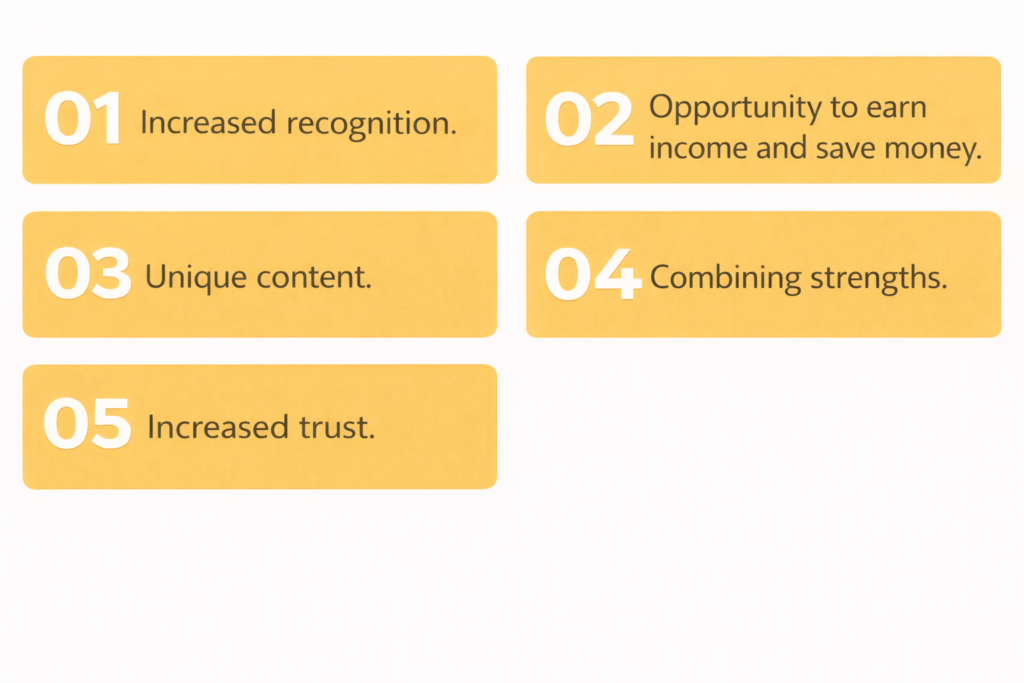
1. Increased brand awareness.
By joining forces with another brand, you can reach a wider audience, gain access to your partner’s customer base, and increase the popularity of your product.
2. The opportunity to earn more and save costs.
You can reduce marketing expenses by sharing them. At the same time, revenue from a well-planned collaboration can be significantly higher than from a standard advertising campaign.
3. Unique content.
Even familiar content becomes more engaging when created together with another brand. It immediately feels fresh. Collaborations also allow you to do something bold and unexpected, combine unlikely elements, and surprise your audience.
Not to mention exclusive limited offers that spark interest and encourage purchases. Just imagine how effectively this can drive attention and demand.
4. Combining strengths.
In collaborations, the strengths of each brand are amplified. Use this opportunity in a mutually beneficial way.
5. Increased trust.
People tend to trust what they have already heard of or experienced. This is especially important for brands that are still growing. Collaborating with another brand acts as an indirect recommendation from a trusted partner.
What types of collaborations exist?
As mentioned earlier, there are several common collaboration formats.
The main scenarios include:
1.Бренд & Другой бренд
The national brand UNITED24 and LEGO Creators launched the #LEGOwithUKRAINE initiative aimed at rebuilding homes in the Kyiv region. The collaboration resulted in models of Ukrainian architectural landmarks. The uniqueness of this initiative lies in the fact that the LEGO sets cannot be purchased — instead, participants have a chance to win one of five sets by making a donation.

Another example is Monobank and ATB, which created a card designed specifically for shopping in the ATB retail chain. The cooperation works as follows: the bank attracts many new customers, while ATB shoppers with the card enjoy additional discounts and can purchase more.
2. Бренд и инфлюенсер.
- A great example is Epicenter’s Black Friday campaign. At a time when the curfew was not yet in place, the retailer opened one store at night exclusively for bloggers. Around ten well-known influencers took part in a challenge where they had to “clear out” discounted products. Each influencer streamed the event on their social media channels. Just imagine the scale of the audience reach.

3. Brand and competitor.
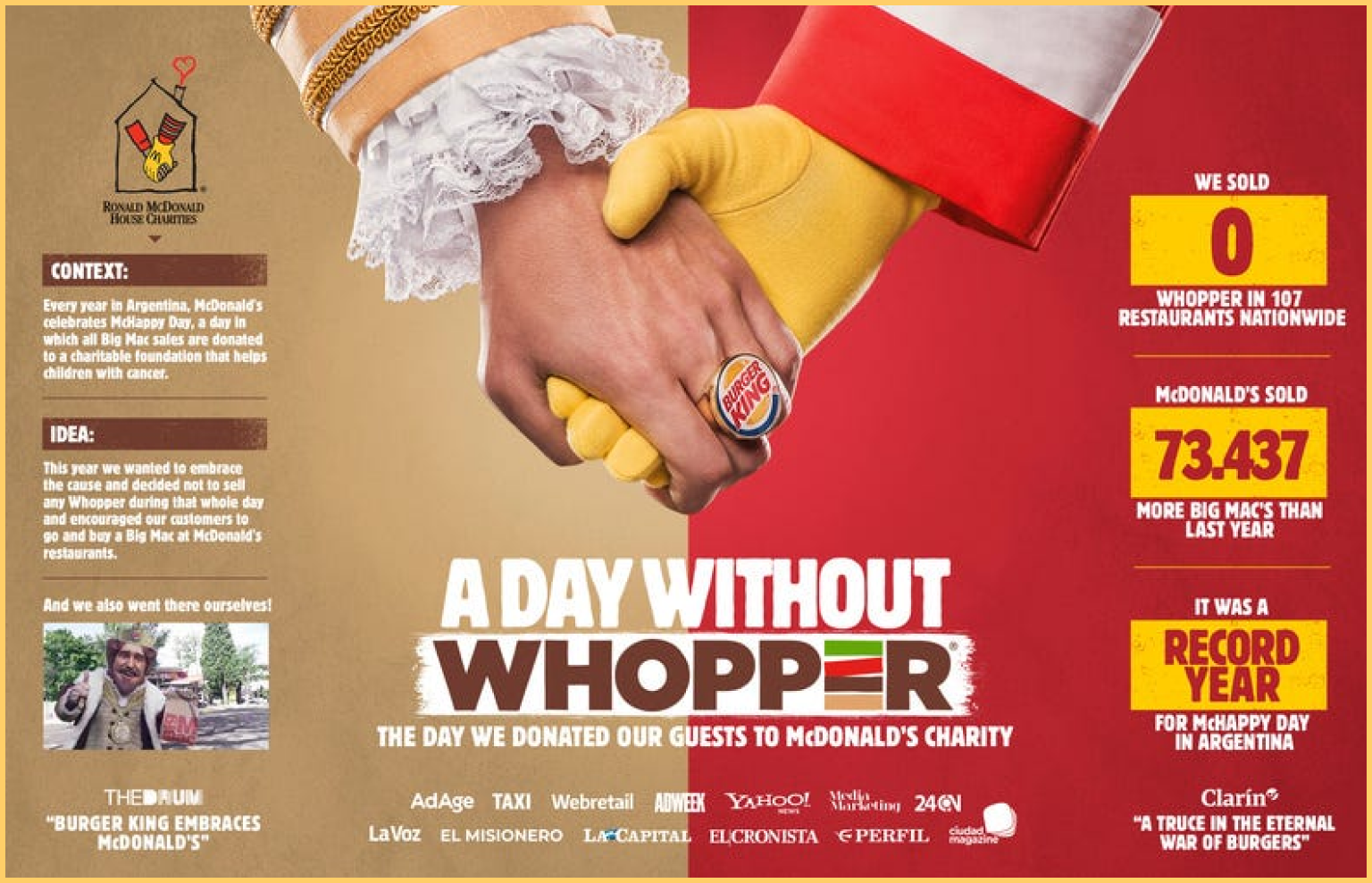
- McDonald’s и Burger King — это, конечно, не украинские бренды. Но что поделаешь, если их сотрудничество является идеальным примером объединения конкурентов на один день.
The campaign was prompted by Burger King’s support for McDonald’s in conducting a charity fundraiser. For one day, the proceeds from every Big Mac sold were donated to children with cancer, and the competitor’s burgers were removed from the menu.
In addition to these formats, brands also collaborate with social initiatives. One example is the special season of the podcast “Prostymy Slovamy,” launched at the initiative of Olena Zelenska to address mental health issues, titled “How Are You?”.
Brands can also collaborate with films and TV series. It is hard to count how many cinema-inspired releases Crocs has launched — recent examples include footwear inspired by Barbie or Shrek slippers with ears and a nose.
Brands can even integrate into video games, such as Louis Vuitton’s collaboration in the game League of Legends.
Choosing the most effective collaboration format can be supported by the remote marketing team at Solve Marketing.
How to prepare for a successful collaboration
⭐️ Define your goals
Decide what you want to achieve through collaboration: reaching a new audience, boosting sales of a specific product, or increasing brand awareness.
⭐️ Think about what else your customer consumes
To choose the right partner, look for a strong match and create an offer that will be interesting for both audiences.
⭐️Collaborate with loyal brands
Brands that have already interacted with you should be a priority. This could include social media engagement, conversations at events, or content exchanges.
⭐️ Be active and visible on social media
Follow other creators, brands, and influencers and engage with their content.
⭐️ Consider the brand’s reputation
Look at the previous collaborations of future partners, what products they have promoted in the past, and how the public perceives the brand.
⭐️ Work under contract
Don’t take risks when it comes to profits and copyright. To guarantee security, you need a contract.
Why do you need a contract?
You may have heard the term “royalties,” which relates to income from creative work. But what does it actually mean?
From a legal perspective, royalties are payments made to an author or intellectual property owner for the use of their work.
Royalties compensate creators for their intellectual property and provide ongoing income from their work. In other words, royalties are payments made to the rights holder in exchange for permission to use a copyrighted work.
Collaboration participants must clearly define rights and profit distribution in the contract. Without this, significant losses are possible.
Achieve the best results from collaborations with the support of experienced marketers. Contact the professionals at Solve Marketing.