Did you know that poor customer service can lead not only to a drop in sales but also to bankruptcy? Back in 2004, US Airways didn’t realise this and paid the price for its ignorance. The airline effectively went bankrupt because it was unable to resolve the numerous complaints from dissatisfied customers, who simply stopped using US Airways’ services.
This is just one of many examples where shortcomings in communication with customers, or a blatant disregard for their need for quality service, have led to unfortunate consequences.
What is “service“, and why is it important?
Customer service — refers to actions aimed at assisting and supporting the customer throughout their entire journey with a product, service or the company itself.
Customer satisfaction directly impacts a business’s profitability and brand loyalty. If you still have even the slightest doubt about this, here are no fewer than 8 reasons to convince you that this is indeed the case.
1. Retaining an existing customer costs 10 times less than acquiring a new one.
You know what they say: an old friend is better than two new ones? It’s the same here. So invest in attracting a new audience, but make sure you keep your regular customers happy.
2. The quality of your customer relationships reflects and embodies your values and mission.
You must not only speak eloquently, but also act with integrity. The most valuable thing you have is not profit, but the trust of your customers.
3. Satisfied customers are your best form of advertising.
Which would you be more likely to believe — a flashy advert or a single piece of honest advice from a colleague or friend? Exactly. Bear that in mind!
4. High-quality service encourages customers to remain loyal to the brand as a whole.
Don’t just limit yourself to handling customer enquiries; try to get to know them better and build strong relationships. Take these few steps to meet them halfway — you’ll never regret it.
5. Customers pay not only for the product, but also for the way they are treated.
Your customers want you to be there for them when they need you. Most of them are happy to pay for this.
6. In business, as in medicine, it is easier and cheaper to prevent a problem than to “treat“ it.
Don’t wait until the customer starts to feel dissatisfied with their experience of the product or brand; try to resolve issues before they arise.
7. The customer is the central figure — indeed, the very reason you started your business in the first place.
The customer is a source of profit and inspiration for you. They are therefore entitled to expect good service.
8. High-quality service is your competitive advantage.
This is particularly true for businesses focused on a widely available, popular product. Everyone wants to make money, but not everyone is prepared to spend it on making the customer happy. Be in the other camp — and the results will exceed your expectations.
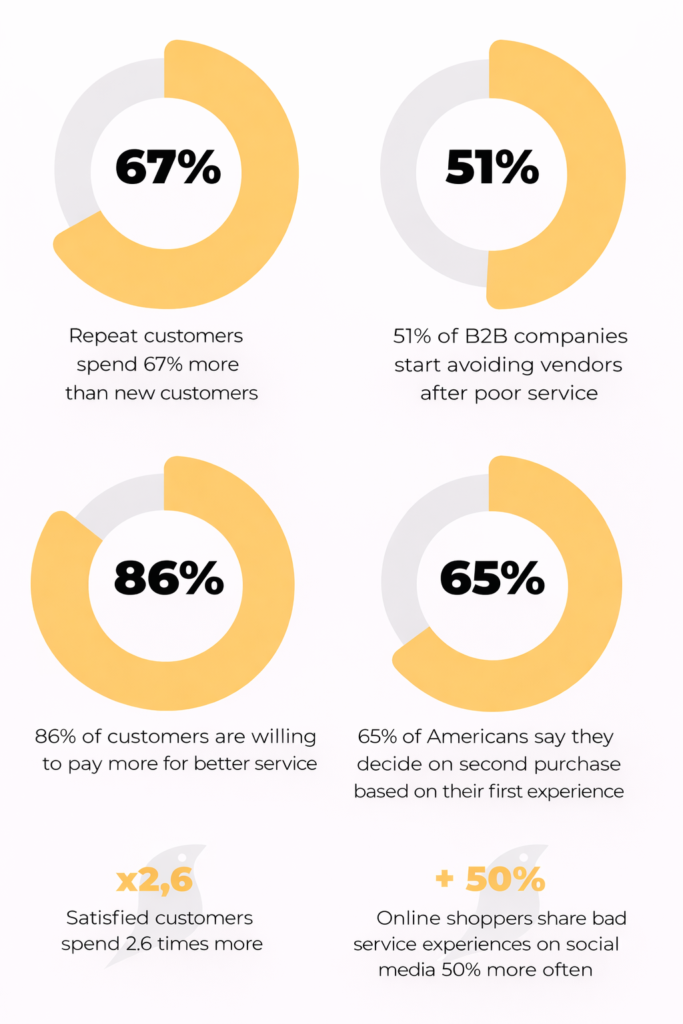
A few more interesting facts in 10 figures
- Over 50% of customers want a response to their enquiry within an hour — especially at the weekend.
- 76% of customers believe that businesses should understand their needs and meet their expectations.
- 33% of customers leave a company because they do not receive personalised service.
- 54% of customers use email as a communication channel.
- 43% of Generation Y consumers use mobile devices to contact customer support.
- 79% of Generation Z are more likely to shop via mobile apps.
Now you know this, and you certainly can’t say that nobody warned you.
A comprehensive service system: what it is and how to set it up properly
Let’s start with the pillars on which the whole system is to be built and stand firm. Only we won’t have three pillars, but four!
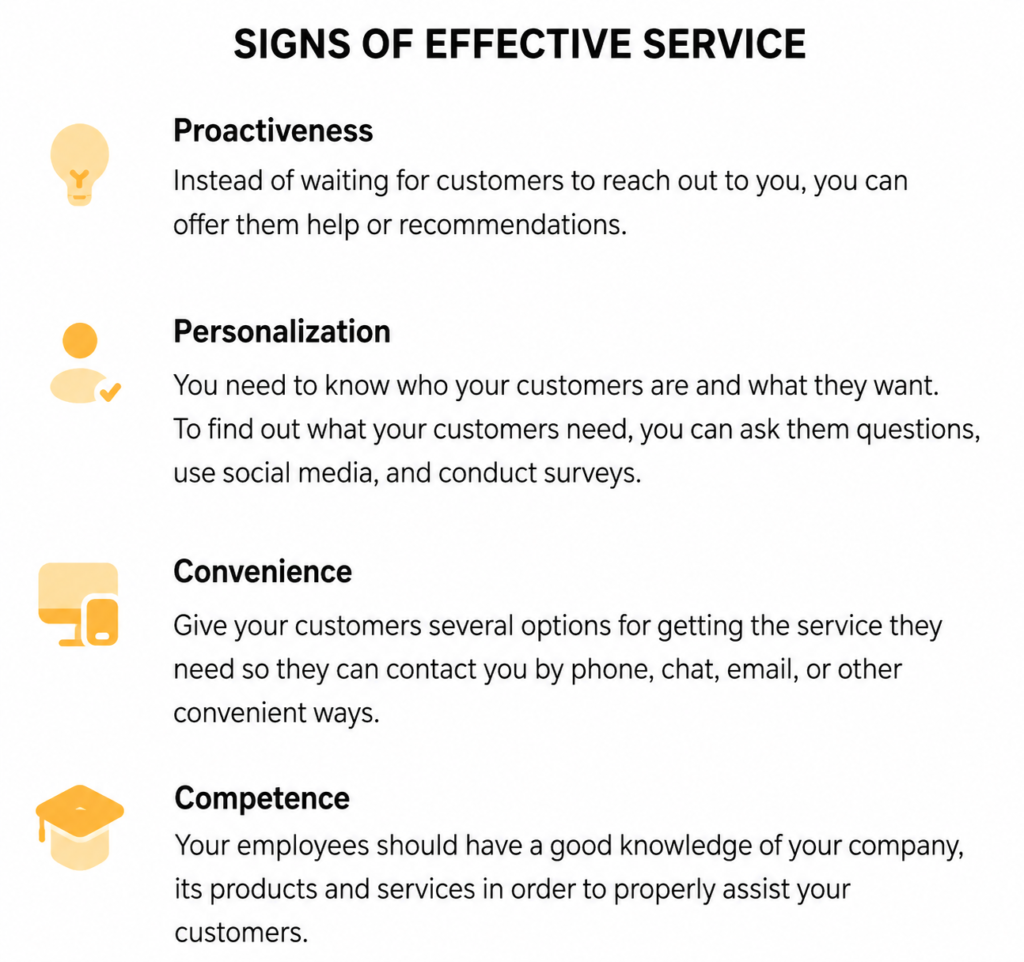
To ensure high-quality customer service, it is important to recruit staff who possess certain personal qualities and to help them develop these qualities further.
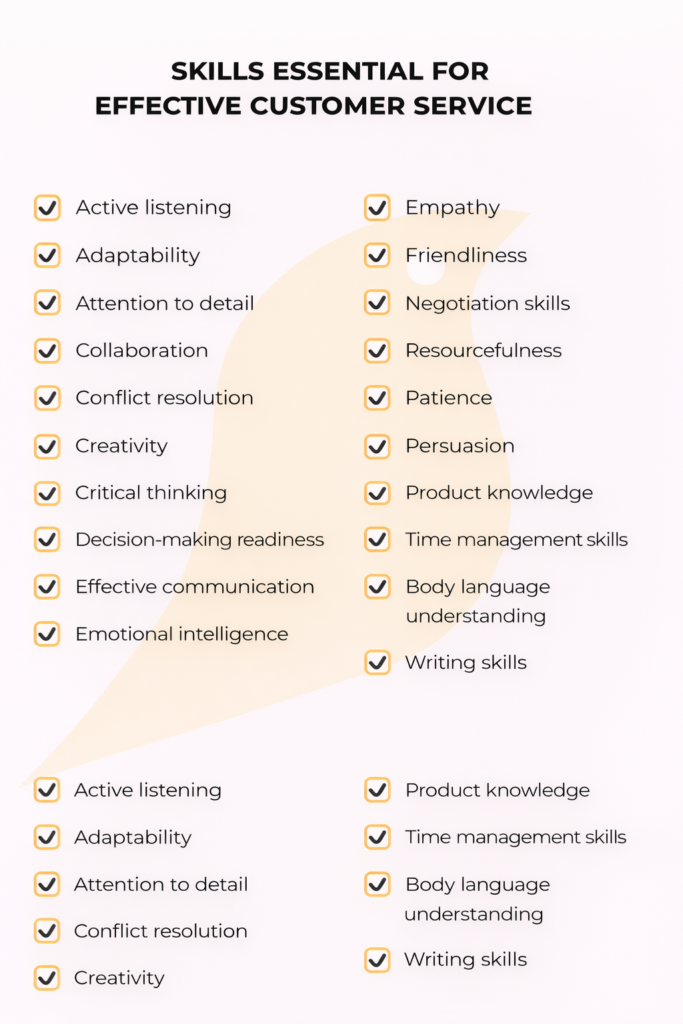
So, a customer-focused employee:
👍 is a good listener;
👍listens to and understands other people’s needs;
👍is attentive to detail, not only at work but also in relationships;
👍 knows how to communicate effectively;
👍 has a gift for persuading others;
👍is able to resolve conflicts in such a way that nobody loses out;
👍 has well-developed critical thinking skills;
👍 has a good understanding of body language;
👍 is generally friendly towards those around them;
👍 is interested in the unique features of your product and can showcase it to its best advantage.
What tools can help you build a service?
- Multi-channel support
Today’s customers don’t just contact you by phone or email. More and more people are opting for messaging apps, social media and the like. At the same time, the desire to communicate “face-to-face” hasn’t gone anywhere. You need to have several communication channels, all of which must work as a single integrated system.
- Self-service systems
The development of digital tools that enable people to buy goods or book services online is advancing in several areas simultaneously. Firstly, it eliminates queues. Secondly, it reduces the time between the desire to buy something and the actual purchase. Thirdly, it has a positive impact on cost optimisation. Furthermore, digital technology reduces the number of errors, as it eliminates the so-called human factor.
- Personalisation of the service
You have to admit, it’s much easier to put together a proposal when you know what your client needs, what they dream of and what they’re afraid of.
- Educational functions
Reviews of new products, useful guides, FAQs, and interesting articles — you have countless opportunities to provide customers with answers to their questions and the advice they need. This tool may not deliver instant results, but it achieves what matters most: building your audience’s trust and loyalty towards the brand and establishing you as an expert in your field.
- Chatbot
These multi-functional systems can handle dozens of people at once; they respond instantly to every enquiry and really do save you money on call centre staffing costs.
- 24/7 support
Don’t make the customer wait for a reply, or they’ll look for it elsewhere. And, incidentally, they’ll buy the product there too. The same chatbots and other customer service automation tools will come in handy here.
- No hassle when shopping
Don’t make it difficult for the customer. Any issues with card payments, or a confusing website or app interface, and just like that, you’ve lost a customer.
- The AR and VR
The future arrived yesterday. That’s why today’s customers expect to be able to explore a product without literally having to get off the sofa. Virtual tours and viewings accessible via a smartphone are a perfect example of how you can “hold” and “see” something you’re just about to buy.
6 steps to improving customer service
- Understand what your client needs
How can you find out? You might not believe it, but the easiest way is simply to ask. You can do this by phone, via special questionnaires on the website, or by email.
- Put yourself in your client’s shoes
Without a certain level of empathy, it is simply impossible to provide high-quality, customer-focused support.
- Don’t be afraid to receive honest feedback
Genuine feedback, even if a customer isn’t entirely satisfied with their purchase, will help you identify issues and point the way towards improvement.
- Measure the service’s performance
You can measure customer satisfaction levels, the number of negative responses, resolution times and so on — choose whatever works best for you. The main thing is that the approach sets the team up for success.
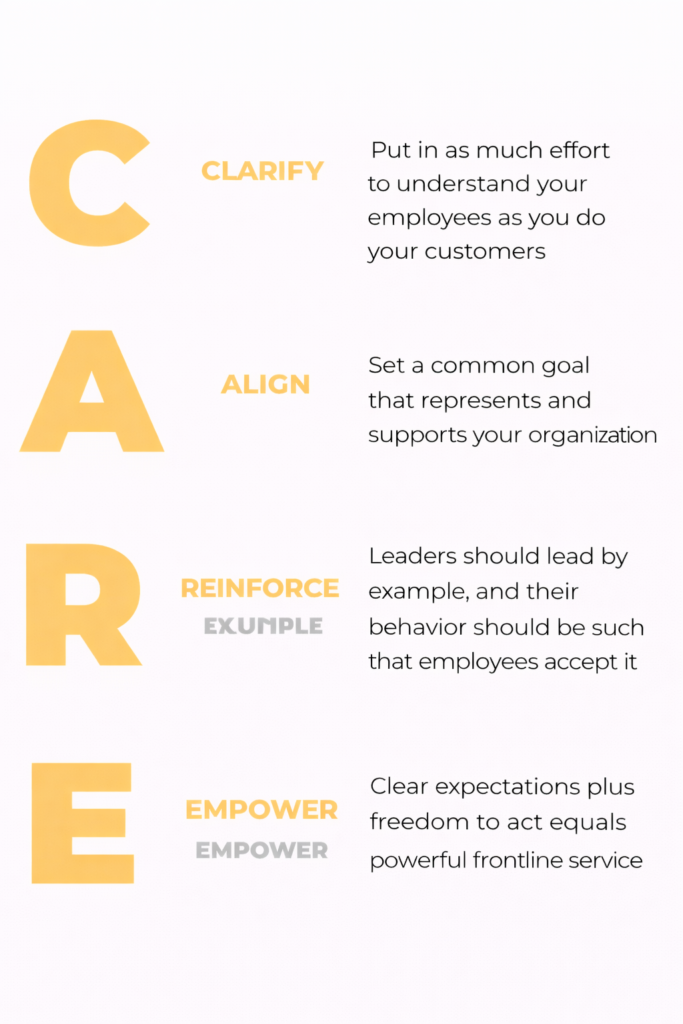
- Set goals for the team and develop service standards
Goals will encourage everyone to move in the same direction and avoid spreading their efforts too thinly. And rules that apply to everyone will help prevent potential mistakes and conflicts.
- Please support the customer service team
Coaching, regular training, expert advice, various workshops and an attractive corporate culture will all come in handy here. Your goal is to build a team where everyone feels at home, whilst also seeing opportunities for growth.
Examples of service-oriented companies
To conclude, here are a few examples of businesses that fully understand that high-quality service is the key to success, and that retaining an existing customer is far more profitable and easier than attracting a new one.
Trader Joe’s
The top spot in the American Customer Satisfaction Index is held by an unusual chain of grocery stores, whose staff wear Hawaiian shirts and are always ready to help. You can also find affordable groceries there.
Chewy
An online pet shop that has simply won over its customers with its highly personalised service. Here you can find all sorts of information about pets, handwritten notes on how to care for them, and even festive cards.
USAA
This banking and insurance company scored almost 10 points in Newsweek’s list of companies with the best customer service. What sets it apart is that it serves those who have served in the US armed forces and their families.
So, providing a comprehensive service is indeed key to success. But what if your aim is to maximise customer satisfaction, yet you don’t yet have enough customers?