56 times more appointments in a year — how to build a dental clinic’s marketing strategy from scratch and reach full capacity.
| Client | Niche | Geo | Format | The data period in the case study |
| Dynasty Stomatology | Private dentistry | Krakow, Poland | Outsourced marketing department | June 2025 — May 2026 |
Dynasty Stomatology is a premium private Ukrainian dental clinic in Kraków. Although the clinic had been operating for over two years, its marketing efforts consisted of a series of isolated activities lacking any overarching logic or management system. Some data was not tracked, enquiries were processed manually, and decisions often had to be made without sufficient information.
The client’s request was to consolidate separate marketing activities into a single system and to establish a predictable patient acquisition mechanism that would ensure a steady flow of appointments and lay the foundations for the clinic’s future growth.
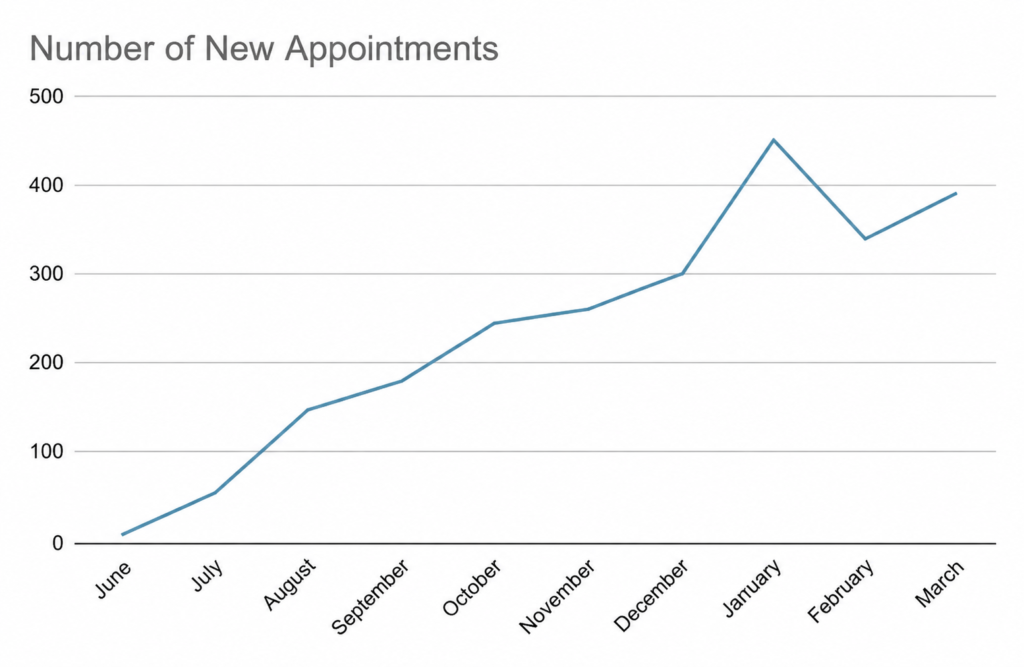
Over the 12 months we have been operating, the clinic has received 2,995 new bookings and a further 1,359 follow-up appointments from existing patients. In 2026, the number of new bookings remained steady at around 100 per week.
Demand was growing faster than the capacity of a single location. At a certain point, the owners found themselves faced not with a shortage of patients, but with the need to expand, which is why the chain’s second clinic opened in Kraków. At the same time, our team was working on launching another clinic in Prague, using the same approach to building the marketing system. But that’s a story for another time.
| 2 995 new appointments over the past 12 months across all marketing channels | 1 359 repeat visits | ×56 increase in traffic June 2025 → January 2026 | 431 new appointments in a record-breaking month January 2026 |
| 2 047 conversions in Google Ads enquiries, calls, forms — over 17 months | $68 average CPA on Googlevs $80–150+ on the Polish market | 21% Instagram appointments 608 new messages via DM | $5,6 The cost of an ad on Telegram Ads the cheapest case channel |
Dynasty Stomatology — how it all began
The clinic opened in Kraków in August 2023. Initially, the team focused primarily on Polish patients; however, the experience of the first few months revealed a different picture: the greatest demand came from Ukrainian patients. Following this, the clinic adjusted its positioning and gradually shifted its focus to the premium segment. Today, approximately 90 per cent of patients are Ukrainian, with a further 8 per cent or so being Poles seeking dental care with a higher standard of service and treatment quality. This proportion continues to grow as the clinic’s Polish-language service develops.
The practice’s model is based on the doctors’ high level of specialisation. Root canal treatment is carried out under a microscope, implant placement is planned using 3D technology, and patients can have X-rays and CT scans carried out during their appointment. A separate area of specialisation is treatment under general anaesthesia supervised by an anaesthetist, which remains a relatively rare service on the Kraków dental market.
Key services and profit margins
From the client’s brief, we identified the priority areas in terms of profitability: in first place were implants, prosthetics and veneers, followed by orthodontics, treatment under general anaesthesia and maxillofacial surgery. It was these services that were given priority in the advertising budget, as they had a direct impact on the clinic’s financial performance.
A key feature of dentistry is that patients often come in after seeing an advert for a single service, but following a diagnosis, they are given a comprehensive treatment plan and gradually undergo that treatment at the clinic. Therefore, a single patient brings the business significantly more than just the revenue from their first visit. For this reason, LTV was one of the key metrics in the project, whilst patient retention and repeat appointments became a distinct focus of the marketing team’s work.
Target audience — three segments
| Segment | Who is that? | What matters to them? |
| The Ukrainian diaspora (~90%) | Ukrainians living in Kraków and the surrounding towns. Families with children, young professionals, entrepreneurs, and people who have moved to Poland to live permanently | Your native language, quick appointments without long waiting times, modern facilities, clear pricing, and a comfortable consultation with the doctor |
| Polish audience (~8%) | Polish customers, whose share is gradually increasing thanks to word-of-mouth, SEO, and the development of our Polish-language service | The quality of treatment, the standard of service, the clinic’s convenient location, online booking, and trust in the doctors |
| Medical tourists (EU) | Patients from Germany, the United Kingdom, Scandinavia, and other European countries who come for comprehensive dental treatment | The cost of treatment is lower than in your country of residence, with no compromise on quality, and you can undergo the maximum number of procedures in the minimum number of visits |
It was also important to understand who Dynasty’s clients are not. The clinic does not target people who choose dental care solely on the basis of the lowest price, who seek treatment only within the limits of their insurance cover, or who are not prepared to follow a treatment plan. Positioning in the premium segment influenced both the choice of marketing channels and the content of advertising messages.
Starting conditions: what we saw on arrival
When the CRM system was first launched, it was still being rolled out. Administrators processed some enquiries manually, and the source of the enquiry was not always recorded. As a result, it was difficult to understand where patients were coming from and which channels were actually effective.
Google Ads and Meta had already been used to attract patients, but the campaigns were launched without being broken down by service and without being aligned with the clinic’s business priorities. They were active on Instagram, made virtually no use of Facebook, and their SEO efforts were still in their early stages.
The website was already generating enquiries, but some users were dropping out before they could make a booking due to an awkward form, issues with the mobile version and cluttered navigation. There were Google reviews, but no one was systematically working on improving them.
Handling enquiries became a challenge in its own right. The speed of response, the quality of communication and the conversion rate into bookings depended on the individual administrator, and there was no uniform standard for handling enquiries.
The clinic already had all the necessary ingredients for growth: a strong medical team, state-of-the-art equipment, positive reviews, patients referred by others, and an advertising campaign already underway. However, each of these elements existed in isolation. Marketing generated enquiries, administrators processed them, and doctors provided services, but there was no overarching logic linking these processes that would enable the clinic to scale up its results and forecast its development several months in advance. Building such a system became the project’s main objective.
What the client wanted
The clinic’s owners set us a specific target — to reach 50 patients a day, or approximately 1,500 appointments a month. The clinic was most interested in dental implants, prosthetics, veneers, maxillofacial surgery and treatment under general anaesthesia, as these areas accounted for the lion’s share of its profits.
For our part, we took a broader view of the task than simply increasing the number of appointments. We needed to understand which channels were bringing patients to each of the priority services, how these channels interacted with one another, where the clinic was losing potential patients, and how we could scale up the results.
When we first started out, we focused on several areas:
- Develop a separate lead generation strategy for each key service.
- ▸ Identify the channels that are most effective for reaching the Ukrainian audience in Poland.
- ▸ Increase the number of posts from the website, content and reviews.
- ▸ Launch a programme to attract patients from other European countries.
- ▸ Coordinate advertising, content, SEO and reputation management in relation to priority services.
- ▸ Set up analytics to get a true picture of each channel.
- ▸ Improve the quality of call and enquiry handling using AI-powered conversation analysis.
What exactly we built
Below, we explain exactly what we did, why we made certain decisions, and how this affected the number of appointments.
🔍 Research and strategy
First, get to the bottom of things, and only then take action
Before launching the new campaigns, we analysed the dental market in Kraków, assessed the competition, and carried out an audit of the clinic’s advertising materials and website. We also examined the clinic’s appointment system, service margins and patient profiles.
During the analysis, several important points became clear:
- Ukrainians in Poland are active users of Telegram, but there are hardly any dental clinics there. This provided an opportunity to reach a wider audience and attract enquiries via the channel, where competition remained minimal.
Implantology and orthodontics not only brought in new patients but also provided the greatest long-term value for the clinic. It was often these services that marked the start of comprehensive treatment.
Some people were leaving the site without signing up. This was due to the lengthy form, issues with the mobile version and an overloaded menu. Alongside the launch of the advertising campaign, these shortcomings also needed to be addressed. - Імплантація та ортодонтія приносили не лише нові записи, а й найбільшу довгострокову цінність для клініки. Саме з цих послуг часто починалося комплексне лікування.
- Частина людей залишала сайт без запису. Причиною були довга форма, проблеми в мобільній версії та перевантажене меню. Паралельно із запуском реклами потрібно було виправляти й ці недоліки.
📣 Paid advertisement
Meta Ads · Google Ads · Telegram Ads · TikTok Ads
The principle on which we have based our work
We immediately ruled out the approach where all advertising directs people to the clinic as a whole.
Someone looking for an orthodontist for their child tends to focus on the dentist’s experience, reviews from other parents and the long-term results. Someone considering dental implants is more concerned about guarantees, the surgeon’s qualifications, the equipment and the safety of the procedure.
The same advert cannot work equally well for both audiences.
Consequently, each specialism was given its own advertising campaigns, messages, creative content and target audiences. Orthodontics, dental implants, veneers, treatment under anaesthesia, paediatric dentistry, surgery and other services were promoted independently of one another.
As a result, we launched over 30 advertising campaigns across four platforms. Each channel was analysed separately, and advertising budgets were reallocated based on the results and the clinic’s priorities.
Meta Ads is an important channel for attracting customers
Instagram and Facebook have become yet another way to connect with potential patients. Many people put off visiting the dentist for years, even when the problem has already become apparent. Our task, therefore, was to remind them of us at just the right moment and make booking a consultation as simple and straightforward as possible.
To this end, we have developed separate advertising campaigns for over 15 specialisms, including orthodontics for children and adults, dental implants, dentures, veneers, paediatric dentistry, surgery, treatment under anaesthesia, periodontology, professional dental hygiene, maxillofacial surgery, medical tourism and other services offered by the clinic.
Every month, the team produced at least five new static creatives and five new videos. We used patient testimonials, videos featuring doctors, treatment outcomes, carousels and offers with a clear call to action. At the same time, we constantly tested different approaches, analysed the results and reallocated the budget towards the most effective campaigns. We paid particular attention to regularly updating the advertising materials so that the audience would not lose interest in them and the campaigns would remain effective.
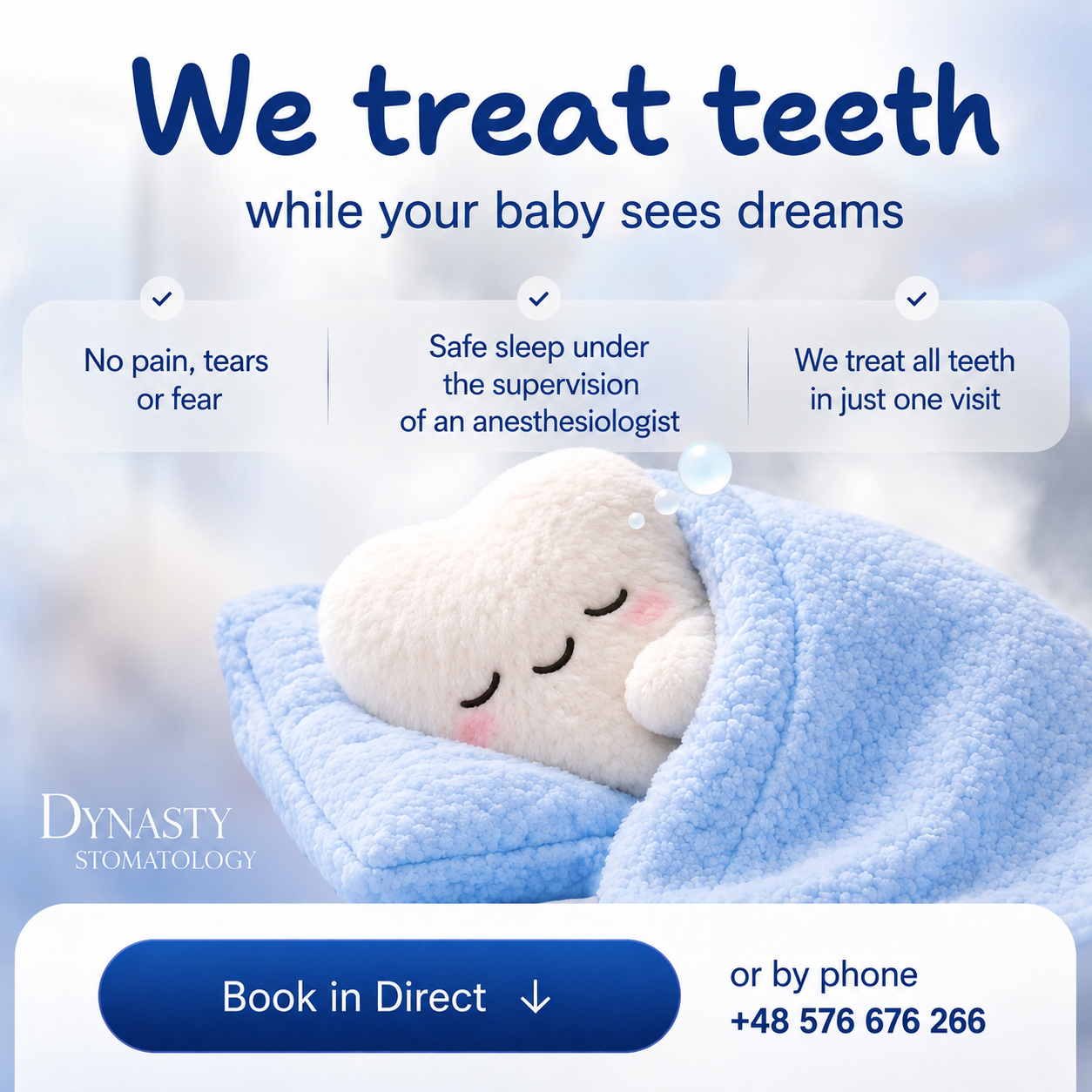
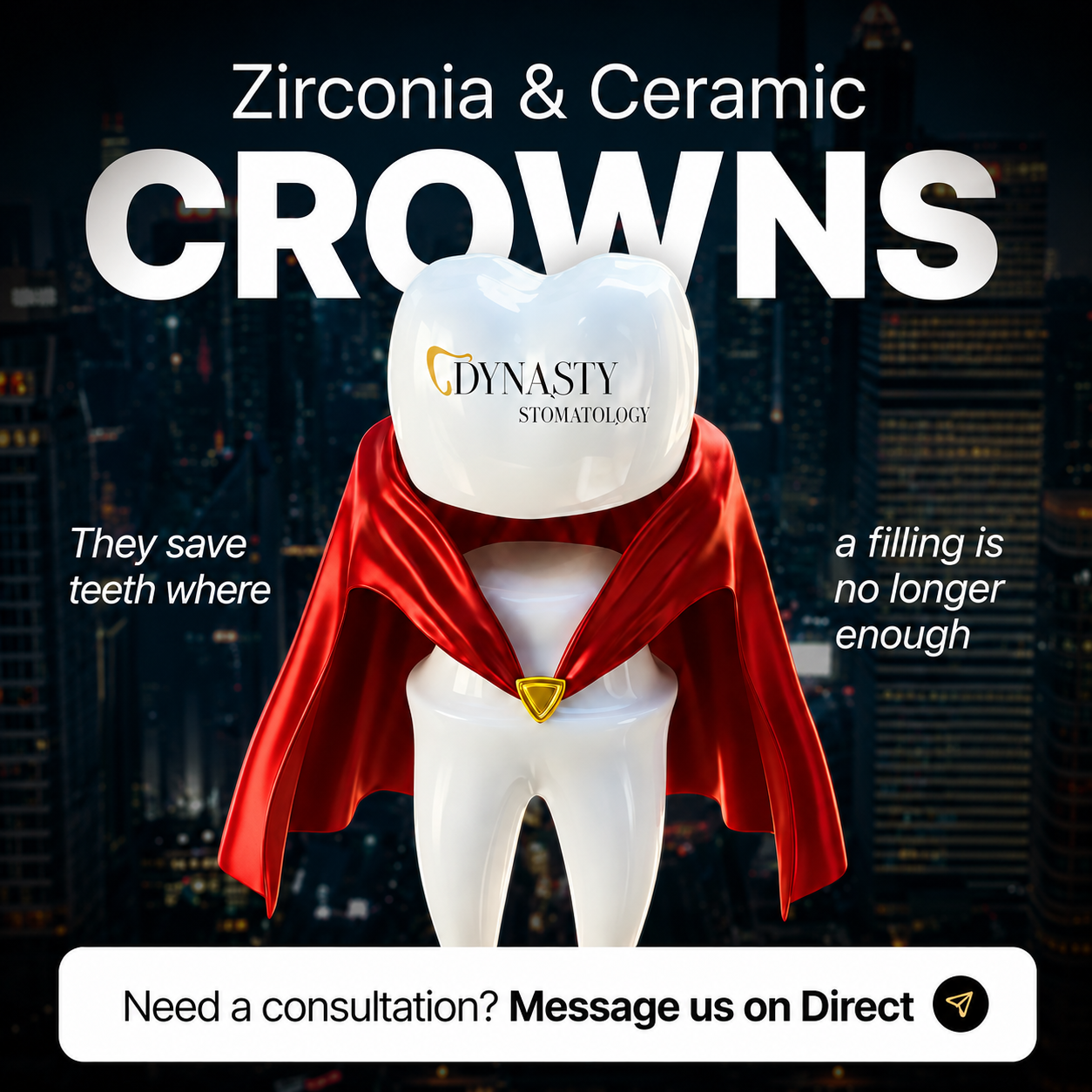

Examples of Meta adverts
Insight: Even the most successful ad creatives lose their effectiveness over time. The audience becomes accustomed to the same messages, attention levels drop, and engagement and conversion rates decline. That is precisely why regularly updating ad creatives is not just part of day-to-day operations, but one of the factors that directly influences the cost per lead, the number of enquiries and the overall performance of advertising campaigns.
Google Ads is the highest-quality lead generation channel
Anyone who types “dental implants Kraków” into a search engine has already made up their mind. Such a client isn’t just interested — they’re looking right now. The conversion rate for bookings via Google is consistently higher than that from social media, and the time from click to booking is shorter.
Since Google Ads was launched, Kraków has generated 2,047 conversions (enquiries, calls, clicks on the phone number) with an average CPA of $68. This is despite the fact that the market average for the healthcare sector in Poland is $80–150+. The average cost per click is $1.43, and the total number of clicks is over 94,300.
| Company | Conversions | CPA | What made a difference |
Implantation (PMax) | 796 | $25 | The highest volume and the lowest price — PMax has found its ideal audience |
| Brand campaign | 358 | $16 | Your own audience, who are already looking for a clinic, is the cheapest source of leads in the whole case study |
| Crowns + bridges (PMax) | 223 | $51 | Stable volume. Dental prosthetics — constant demand |
| Braces (PMax) | 142 | $34 | Orthodontics — high demand, good CPA |
| Treatment under anaesthesia | 87 | $48 | A unique service — there is virtually no competition |
| Polish audience | 46 | $204 | A distinct segment in the development process |
| Medical tourism (the UK, Germany) | 127 | $308 on average | A new direction. The CPA is higher, but the payment is also significantly higher |
Telegram Ads is the biggest surprise
For $361, we received 64 verified leads via the CRM. The average cost per lead was $5.6. By way of comparison, achieving the same result on Meta would have cost $6,000+.
Why did it work? Telegram is a platform with a constantly active audience. Ukrainians in Poland are active users of Telegram: there are large themed chats, news channels for the diaspora, and mutual support groups. Dental advertising is a rarity there. We were the first to get in and reached our target audience straight away.
We launched an advertising campaign across three touchpoints: the website, the clinic’s Telegram account, and the Telegram bot for booking appointments. At the same time, we ran organic outreach: we responded on behalf of the clinic in relevant chat groups whenever someone asked, “Can you recommend a dentist in Kraków?” This is a free method, but it generates very high-quality leads — someone who has already asked for a recommendation comes with a much higher level of trust.
Insight: You never know which advertising channel will work best – or indeed which one will work at all. That’s why it’s important to launch and test new channels, not to be afraid to experiment, and to take the initiative in proposing new ideas and approaches.
Telegram Ads: $361 spent → 64 sign-ups. CPL ~$6 — a record figure.
TikTok Ads targets a young audience
We have also launched test campaigns across seven areas: orthodontics, paediatric dentistry, veneers, consultations, dental implants and others. The channel is still being optimised, but the strategic logic is simple: the young audience watching TikTok today will be looking for a dentist tomorrow. Being there before the competition is an advantage that’s hard to make up for later.
✍️ Content and SMM
Instagram · Facebook · TikTok · Telegram · Блог
Content is the foundation of communication
Advertising directs people to a profile or website. But it’s the content that makes the difference. If someone clicks through from an Instagram advert and sees an empty or outdated profile, they won’t book an appointment. If they see engaging Reels featuring doctors, reviews from real patients, and posts showing before-and-after results, their level of trust increases and they’re much more likely to make a call.
That’s why we build our content as the foundation of the funnel. Every post, every Reel, every blog article is either a step towards a first appointment or a way to strengthen the loyalty of those who are already patients.
Over the course of 12 months, the clinic’s Instagram following grew from 5,800 to over 21,000 followers — more than a threefold increase. But followers aren’t the goal; they’re the result of creating the right content. 21% of all new bookings came directly via Instagram (608 bookings via DMs).
Insight: Many businesses would settle for Instagram, as it is an intuitive and widely used platform. But Instagram doesn’t work on its own. Growth in the number of followers and their loyalty to the brand are the result of implementing a comprehensive content strategy.
Every month, we produce: regular posts and Reels about the clinic’s services, Stories and Highlights, patient video testimonials (shooting and editing briefs), posts on Google My Business, SEO articles for the blog, email newsletters and messages via the Telegram bot. Plus, over 10 new adverts and briefs for Meta.
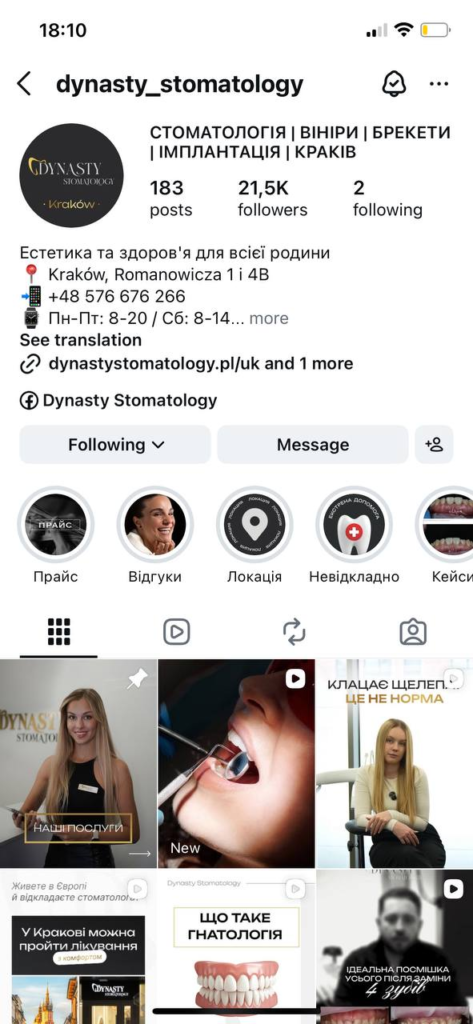
The clinic’s Instagram profile
🔄 Channel synchronisation
When all the instruments speak with one voice
The key difference between an individual tool and a marketing system becomes apparent when a business needs to achieve a specific result. A single advertising channel, an Instagram account or an advertising campaign may or may not work. It is difficult to build predictable growth on them.
That is why we did not work with the channels individually.
If the clinic needed to increase the number of appointments for dental implants, Google Ads, Meta Ads, the website, Telegram, content, and the doctors’ social media posts would all start promoting this service at the same time. A person might see the clinic in a Google search, come across a video on Instagram a few hours later, and then visit the website to find the same service advertised there.
We didn’t expect the advert to generate business from just one channel. We designed the campaign so that people would come across the same offer repeatedly in different places.
| Channel | What are we doing to strengthen this priority area? |
| Google Ads | Launching or increasing the budget for search and PMax campaigns |
| Meta Ads | Video and static adverts targeted at a specific audience |
| Website | Pop-up banner and themed banner in the relevant section |
| Instagram / TikTok | Highlights, Stories, Reels: an explanation of the service |
| Telegram Ads | Targeted advertising |
| Email + TG-бот | A mailing to the database containing a reminder and a relevant offer |
| Blog + Google My Business | An SEO article and a GMB listing on the topic |
Example: when we’re organising treatment days under general anaesthesia, we run adverts on Google and Meta, display a pop-up on the website, post Reels explaining the procedure, add them to Highlights, and send out a newsletter to our mailing list. The result is maximum reach and maximum bookings for specific dates.
And most importantly, the business has a controlled tool for increasing the number of bookings in specific areas. We know exactly which levers to pull to achieve this result.
✈️ Medical tourism
Patients from the UK, Germany and Scandinavia
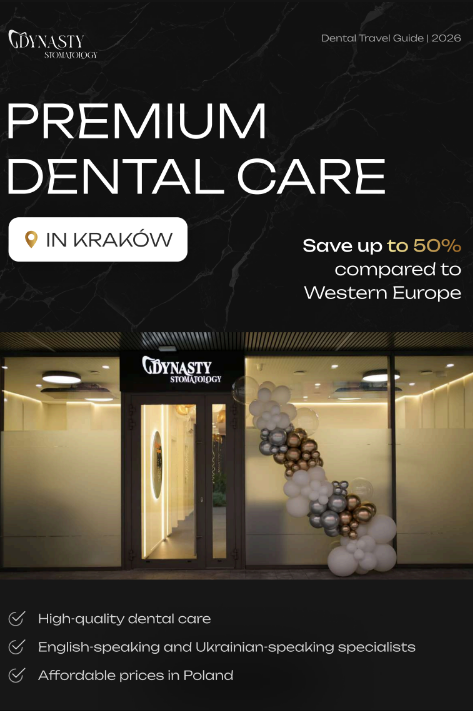
Dental treatment in Poland costs two to three times less than in most Western European countries, and in our client’s case, it is also of a higher quality. For a patient from London or Berlin, a trip to Kraków for comprehensive treatment is well worth it, even when you factor in the cost of the flight. Dynasty offers everything this segment needs: state-of-the-art equipment, English-speaking staff, a full range of services and transparent pricing.
For this area, we have developed a dedicated strategy that engages the client at every stage. Targeted advertising on Meta and Google is aimed at the UK, Germany and Scandinavia, complemented by campaigns on Telegram Ads. Interested parties receive PDF brochures and presentations, whilst we simultaneously prepare materials for Bookimed. Native posts on forums for expats attract a “warm” audience, whilst a dedicated landing page with language versions collects all enquiries in one place.
Result: right from the start — 127 conversions from international Google Ads campaigns. The initiative is still in its early stages, but it is already generating a steady stream of patients from abroad.
Information for medical tourists
🌐 Website, SEO, and content marketing
CRO · landing pages · blog · GMB
At the outset, the website audit identified several critical issues: a lengthy and complicated registration form (too many fields, no submission confirmation), non-functional buttons in the mobile navigation, and an overloaded menu containing niche terminology that the average patient would not understand. All this meant that whilst we could drive traffic through advertising, it would be lost on the website itself.
We drew up a detailed technical specification for improving the website and, in parallel, began work on the content: 14 niche service pages (UA, PL, EN), separate landing pages for medical tourism, treatment under anaesthesia, instalment plans, and loyalty schemes. Two SEO articles for the blog each month. Monthly posts on Google My Business. Pop-ups and banners to promote priority services in real time, and much more, which had a significant impact on the website’s conversion rate.
SEO promotion in partnership with SEOGeeks
Alongside advertising campaigns and content, we work closely with the agency’s SEO team, SEOGeeks, and this partnership has become a key part of the project’s overall success.
For us, this is a key operating principle: the client evaluates the overall result, not individual tools or contractors. Therefore, even when external teams are working on a project, our task is to integrate their work into a single system and ensure progress towards a shared goal.
Whilst we were responsible for patient acquisition through paid channels, content and reputation management, SEOGeeks worked on building the clinic’s long-term organic visibility in search results: technical website optimisation, semantic core, SEO-optimised content, link building, optimisation for Google’s E-E-A-T algorithms, and a new growth area — visibility in AI search (ChatGPT, Gemini, Claude).
The result for Kraków was a 408% increase in organic traffic.
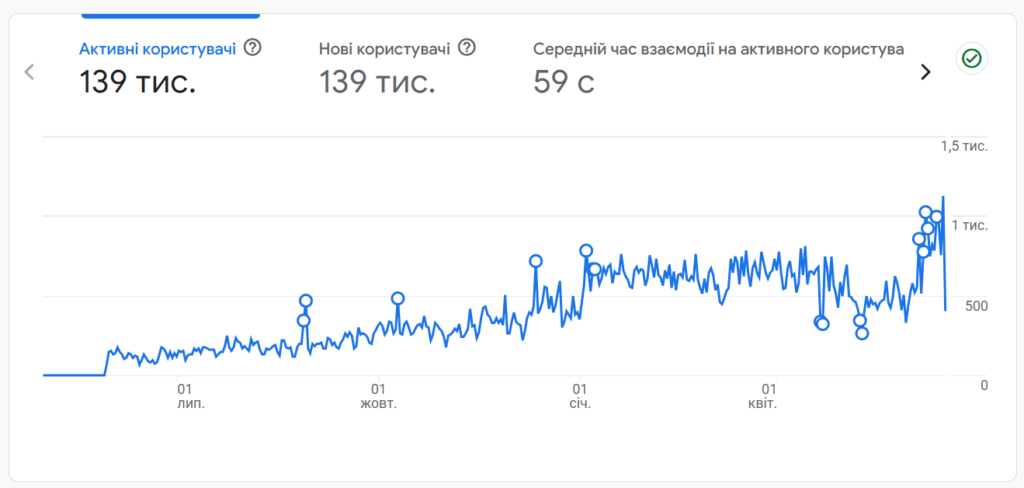
Results for the first year in GA4, shown in a graph
The website has reached the top of Polish search results for key dental search terms in Ukrainian, Polish and English. At the same time, SEOGeeks has launched and is promoting the website for the Prague branch, but that’s a different story and a separate case study.
You can find out more about the team’s approaches and their technical solutions for various niches on the agency’s website SEOGeeks.
Insight: Sometimes there’s no need to run adverts on a website, wait for the results and only then make changes. Our experience is often enough to implement these changes straight away, and only then run the adverts.
⭐ Reputation marketing
Google · Trustpilot · Telegram · Reddit
A patient saw an advert, became interested and visited the website. And what do they do next? That’s right: they search for reviews online. If there are no reviews, or if they’re poor, there’s no trust — and no phone call either. That’s precisely why reputation management is an essential part of any marketing strategy.
We monitor and respond to Google reviews and Trustpilot reviews. We also respond to comments under adverts. This is very important, as a negative comment left unanswered reduces the conversion rate of the entire campaign.
Insight: The first step in effective reputation management is not just setting up a system to monitor reviews, but also establishing a feedback loop between the customer and the brand. Rather than responding to dozens of similar negative comments, you need to address the root cause and rectify it. That is why the marketing department’s work is closely linked to the company’s operational processes. We inform customers exactly what needs improving — changes are made — and the brand becomes even better. In this regard, every review is truly important, and our task is not simply to respond to it but to use it as a catalyst for positive change within the company.
As well as managing reviews, we regularly provide the client with briefs for collecting video testimonials from their customers, which we then use in our communications, including in advertising.
The reputation department’s work also involves native posts in Telegram chats and on Reddit: we reply when someone asks, “Can you recommend a dentist in Kraków?”
As this case study has already turned out to be quite extensive, we cannot go into too much detail on each section. Suffice it to say that if your brand needs a marketing department that looks after the company’s reputation, please get in touch — we’d be delighted to help.
🤖 AI call analytics
Quality control of incoming applications
Thank you for reading this far. This case study has indeed turned out to be quite extensive, as we work across many areas simultaneously and act as a fully-fledged marketing department. It is therefore impossible to summarise the tasks and results in just a few words.
This section concludes the list of areas; in the next one, we’ll look at the figures and draw our conclusions.
So, regarding call analytics: as we generate hundreds of enquiries, it is important to convert as high a percentage of these enquiries into sales as possible. 46% of new bookings come via telephone calls — 1,341 bookings per year. This means that the clinic’s receptionists are the key link between marketing and results. If a call is handled poorly, no appointment is made, and the entire marketing budget is wasted.
We have therefore developed an AI-powered call analytics system: service standard scripts, assessment criteria (adherence to the script, communication style, handling objections, closing the call with a booking), and automated quality assessment for every call. This has enabled us to identify weaknesses in the handling of enquiries and systematically increase the conversion rate from calls to confirmed bookings.
The figures — in full
New appointments by month (CRM, June 2025 — May 2026)
| The month | New appointments | Dynamics | Comment |
| June 2025 | 8 | Start | The first month. The system is just getting started |
| July 2025 | 57 | +500% | The first campaigns are proving effective |
| August 2025 | 152 | +150% | The system is speeding up. The optimisation has worked |
| September 2025 | 183 | +20% | Steady growth |
| October 2025 | 247 | +39% | Budget expansion + new areas of focus |
| November 2025 | 264 | +4% | Consistently. CPL optimisation |
| December 2025 | 298 | +15% | Growth despite seasonal fluctuations |
| January 2026 | 431✦ record | +33% | The best month ever |
| February 2026 | 336 | -15% | A seasonal pullback following the peak |
| March 2026 | 387 | +15% | Recovery and growth |
| April 2026 | 343 | -13% | A stable level |
| May 2026 | 289 | It’s been a month now, and the pace remains steady | |
| In total | 2 995 | new appointments over the past 12 months |
×56 represents the growth between the first month and the best month. This is what the results of systematic marketing look like.
Sources of new bookings — where the patients came from
One of the most important indicators is where patients actually come from. Here are the CRM figures across all channels for the past 12 months:
| Source | Appointments | % of the total | What’s behind this? |
| Calls | 1 341 | 46% | A call is the result of advertising, SEO, recommendations or reputation. The main conversion channel |
| Instagram (DM) | 608 | 21% | Direct messages sent via Direct following content or an advert |
| Website (online form) | 394 | 14% | Organic traffic, SEO, traffic from adverts, converted on the website |
| Telegram | 212 | 7% | Telegram Ads + native posts + the clinic’s Telegram bot |
| On-site registration | 96 | 3% | A patient who is already at the clinic can book a follow-up appointment or one on referral |
| What’sApp | 31 | 1% | An additional channel of communication |
| Other sources | 313 | 8% | |
| In total | 2995 | 100% |
Important: a phone call (46%) is not an “unknown source”. Behind every call lies a previous point of contact: an advert the person saw, an Instagram post, a Google review, or a blog article. Marketing leads the person to make the call — the administrator then converts the call into a booking. That is precisely why we have simultaneously introduced AI call analytics.
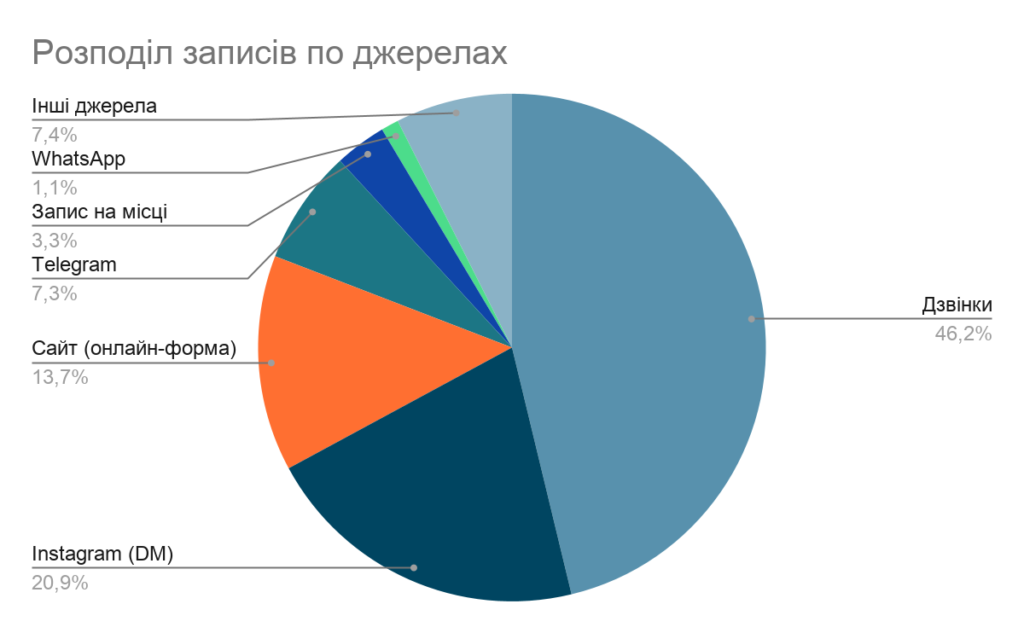
Breakdown of appointments by source
Breakdown of new appointments by category
| Field | New appointments | % of the total |
| Therapist | 661 | 24% |
| Implant surgeon | 614 | 23% |
| Orthodontist | 441 | 16% |
| Orthodontist | 438 | 16% |
| Hygiene | 243 | 9% |
| Endodontist | 158 | 6% |
| Paediatric dentist | 149 | 6% |
Implant surgeons came second (614 appointments, 23%) — this is a direct result of focusing the advertising budget. Implantology was identified as a priority area from the outset, and the Google Ads campaign for implantology yielded the lowest CPA of all (approximately $25 per conversion). General practitioners coming in first place is down to organic demand: people visit “the dentist” and receive a comprehensive treatment plan.
Pay-TV channels — details
| Channel | Budget / Period | Result | CPA |
| Meta Ads | $38,100 / June–December 2025 | 402 confirmed appointments in the CRM | $94 per registration |
| Google Ads | $134,700 / January 2025 – May 2026 | 2,047 conversions (enquiries, calls, forms) | $68 on average |
| Telegram Ads | $361 / for the entire period | 64 confirmed appointments in the CRM | $5.6 — a record |
| TikTok Ads | $830 per test | Channel under optimisation | — |
A brief explanation: Google Ads conversions and CRM records are different metrics. Google counts all target actions: a completed form, a click on a phone number, or a call made via an advert. The CRM captures the final, confirmed appointment. Both metrics are important and complement each other.
Regular patients: a loyal customer base
In addition to 2,995 new patients, the clinic has an active base of regular patients. Over the same 12-month period:
| Category | Quantity | What does this mean? |
| Regular patient | 1 014 | Patients who return regularly for various services |
| General orthodontist | 193 | Patients undergoing active orthodontic treatment |
| Regular children’s | 97 | Families with children are regular visitors |
| Dynasty Club | 55 | Loyalty scheme members — the most loyal audience |
| Total permanent staff | 1 359 | An active customer base that returns and recommends the clinic |
Having 1,359 regular customers alongside 2,995 new ones is a sign of a healthy business. People don’t just come in — they stay and come back. This is the result not only of marketing, but also of the quality of our product, which we are simultaneously enhancing through reputation-building tools.
What exactly worked and why
If you look at the overall outcome of this project, it cannot be attributed to a single channel, a single creative concept or a single successful advertising campaign.
The biggest impact came from structuring the entire system correctly: a clear understanding of exactly who we are targeting, which services are a priority for the business, how people choose a dentist, and what influences their decision to book an appointment.
Instead of advertising “for the clinic” as a whole, we focused on specific audiences, specific services and people’s specific needs. It was precisely this approach that enabled each channel to deliver the best results.
- Telegram Ads for Ukrainians in Poland
The cost per lead of approximately $6 was the result not so much of effective advertising as of choosing the right channel. Ukrainians in Poland are active users of Telegram, and there were virtually no dental clinics there. We gained access to a large audience with minimal competition and low advertising costs.
- Promoting each service individually
Instead of one or two campaigns targeting the clinic as a whole, we launched over 30 campaigns for specific services. Someone looking for an orthodontist for their child and someone planning to have dental implants choose a clinic based on different criteria. When the message matches a person’s specific query, the advert is more effective. For example, the average cost per conversion for dental implants on Google was around $25, which is one of the best figures we’ve seen in the healthcare sector.
- Instagram as a source of posts
Through Instagram, the clinic received over 600 new bookings, or approximately 21% of all new patients. This was the result of regular content, Reels featuring doctors, patient reviews and ongoing work on the page.
- Native crops in local communities
When a clinic is recommended in response to a specific question in a chat or group, people arrive with a certain level of trust already established. Such referrals usually convert better than traditional advertising. It is difficult to scale this channel, but it has proved very effective as a complement to other sources.
- AI call analytics
Almost half of the bookings were made by telephone. If a call is handled poorly, no advertising campaign can make up for it. Analysing the calls helped to identify weaknesses in the administrators’ work, introduce consistent standards and increase the conversion rate from calls to bookings.
- The coordinated operation of all channels
The same service was promoted simultaneously via Google, Meta, Telegram, the website, content and reputation management. As a result, people came across the clinic on more than one occasion and in more than one place. It was precisely this synchronisation that was one of the reasons for the steady increase in the number of bookings throughout the project.
Who is behind this result?
We are often asked how many people are working on a project. Clients usually expect to hear about a single marketing specialist or a single advertising specialist.
In practice, things are different.
Behind this project is a team of specialists from various fields: strategy, advertising, content, design, analytics, SEO, reputation management, automation and call handling. Part of the team worked in-house at Solve Marketing, whilst the rest were partners and contractors whom we coordinated as part of this joint project.
That is precisely why we call ourselves an outsourced marketing department. Rather than a single specialist or a set of services, the client receives a team with clearly defined roles, where everyone is responsible for their own part of the work, and the whole system works towards a shared goal.
| Role | Area of responsibility |
| Head of Marketing Team | Strategy, key decisions, quality control of the outcome |
| Project Manager | Project management, client communication, weekly reports, work plans, meeting deadlines |
| Operations Marketer | Analytics, reporting, process optimisation, day-to-day task management |
| PPC — Meta Ads | Launch, optimisation, scaling, A/B testing |
| PPC — Google Ads | Search campaigns, PMax, media planning |
| PPC — Telegram / TikTok | Telegram Ads, TikTok Ads, native ads |
| SMM / Content Marketer | Content plan, posts, Reels, the clinic’s Telegram channel |
| Copywriter | Advert copy, SEO articles, landing pages, translations |
| Designer (advertising and content) | Banners, content design, branding materials |
| Motion designer | Video reviews, Reels, videos for the clinic’s reception area, dynamic advertising |
| UX / Web Designer | Hub pages, landing pages, website banners, CRO |
It is precisely this team structure that enables us to work simultaneously on advertising, content, the website, SEO, analytics, reputation management and new areas of development. Whilst one part of the team launches advertising campaigns, another works on content, and a third on the website or analytics. Thanks to this, the project does not depend on any one person and does not find itself in a situation where important tasks are put on hold due to a lack of time or resources.
What can we learn from this?
Whilst working on this project, we didn’t find any single “magic button” that guaranteed results. It wasn’t Telegram, nor Google Ads, nor Instagram.
The greatest impact came from a systematic approach: a clear understanding of the audience, a focus on priority services, a separate strategy for each area, reputation management, quality control in handling enquiries, and the coordination of all channels with one another.
These are the things we recommend you pay attention to first and foremost:
- A systematic approach is more important than any single tool
There is no ‘magic channel’ that accounts for 90% of the result. The result is always the sum of the following: strategy + advertising + content + reputation + website + customer service. If one element is weak, it holds the whole chain back.
- Segmentation leads to efficiency
Having 30+ campaigns instead of just 2–3 ‘one-size-fits-all’ campaigns makes it possible to discuss each patient’s specific problem with them and secure bookings at a reasonable price, even in a competitive market.
- Phone calls are part of marketing
When 46% of enquiries come via the phone, call tracking is essential. If the administrator handles calls poorly, half the marketing budget is wasted. Standards and call analytics are the bare minimum.
- An increase from 8 to 431 new enquiries per month is the result of the system we recommend everyone to set up
Behind every figure in the table lie updated adverts, audience tests, budget reallocations and data-driven decisions. There’s no magic involved — just consistent hard work.
Would you like a system like this for your business?
Solve Marketing — a fully-fledged outsourced marketing department for businesses anywhere in the world.
We build systems that deliver results.