In B2B, it’s not enough just to “be visible” or launch an ad campaign. Completely different rules apply here:
- decisions are made by multiple people;
- sales cycles last for months;
- choices are always accompanied by a demand for trust, specifics, and consistency.
B2B companies seek well-founded answers to their business challenges.
That’s why effective B2B marketing is about a holistic system — from research and strategy to content, advertising, and analytics.
In this case study, we demonstrated how such a system works in practice. For the HRM platform MayBee, we didn’t just launch ads; we became a remote marketing department, taking on the entire daily workflow — from strategy to content, from analytics to communication.
The MayBee HRM platform was born from the internal needs of the team. Over 12 years of IT development, the team refined their own HR processes: recruiting, onboarding, analytics. This gave rise to the idea of creating a platform “for themselves” — intuitive, simple, and human-centered.
But the most interesting part begins when a product moves from internal development into the wider world.
We started our collaboration by developing a marketing strategy. We successfully built a project development roadmap based on research into the growth potential across five countries:
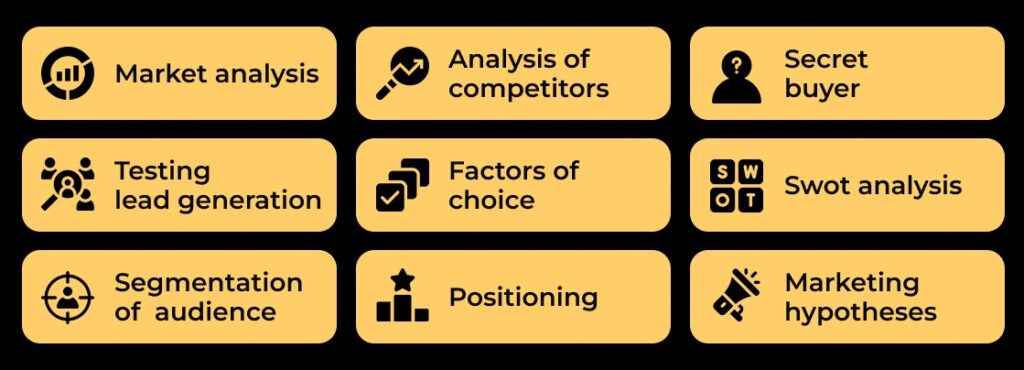
But for the strategy to work, it’s important to apply all the acquired knowledge — not just keep it in a document: test hypotheses, implement positioning, and choice factors.
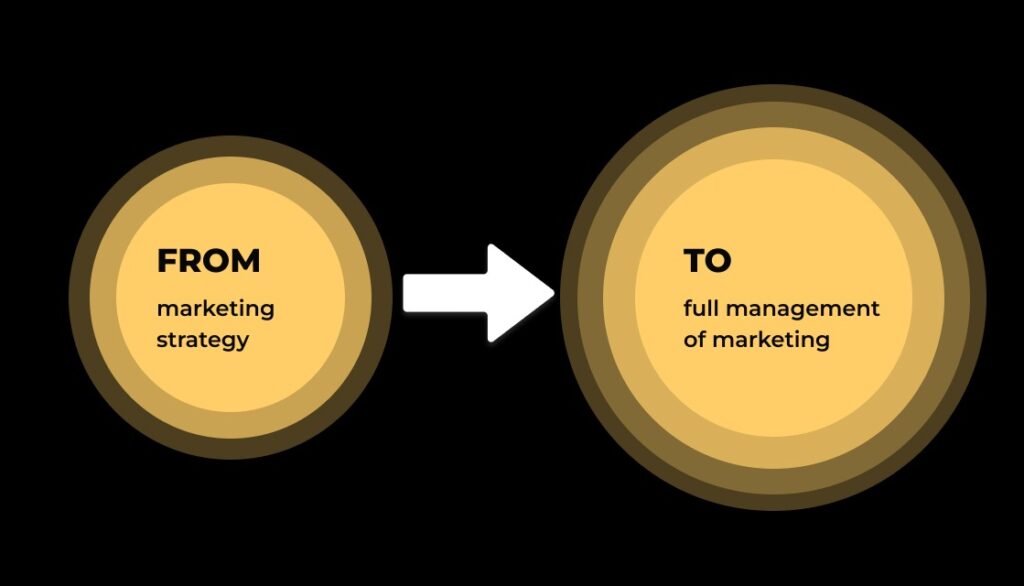
After the strategy was approved, we became the remote marketing department for MayBee, taking on the entire daily cycle of tasks — from content creation to lead generation.
Our first step
At the start, MayBee had everything needed to launch: a great product, the right values, and initial clients. What was missing was consistent communication with the market.
First step:
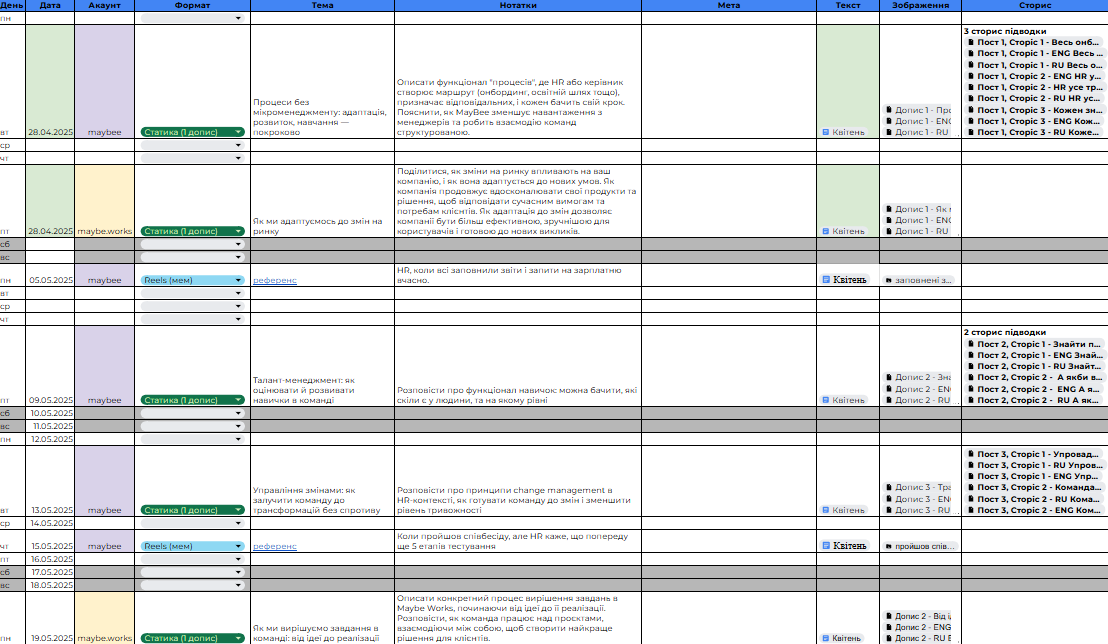
- Created clear content plans for each month.
- Launched regular posting and stories.
- Designed the system so that posts cover key client “pain points”: explaining the product, answering real questions from HR specialists and recruiters, and creating a sense of a lively brand.
Second step:
- Added short reels and conversational videos.
- Created visuals and texts that help convey the product without overload.
Third step:
- Adapted content for the English-speaking audience.
- Adjusted style and messages for different markets.
Insight: even if you have a useful product, without systematic content, customers hear about you sporadically and randomly. However, trust is more likely to develop where there is regularity and a simple explanation of who you are and how you really help.
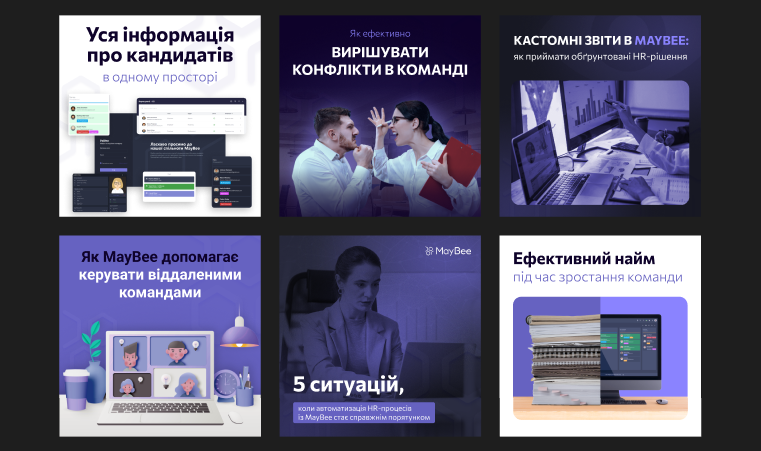
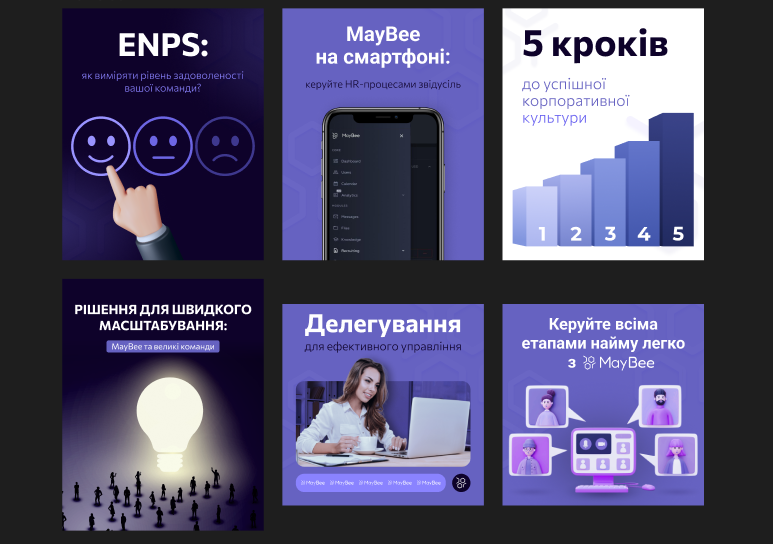
We developed content plans, wrote posts, created stories and designs, and adapted content for English versions. We actively tested new approaches and worked comprehensively:
- 8–10 posts per month;
- 16–20 stories monthly;
- 2–3 videos and reels with subtitles;
- translation and adaptation for the English-speaking audience
Example posts:
Marketing is about testing and course correction
At the marketing strategy stage, we analyzed all launched activities: advertising accounts, campaign goals, and analytics setup.
Each audience needed to receive the right message at the right time. Someone who just heard about you yesterday and someone already comparing you to competitors are different people — and you need to communicate with them differently.
Insight: It’s necessary to build a journey from initial awareness to submitting a request, while simultaneously considering different audience segments who are at various stages of decision-making.
At the strategy stage, we planned everything thoroughly and have now moved on to creating materials:
- Wrote ad copy adapted to specific stages of the customer’s decision-making process.
- Prepared creatives: both static and dynamic.
- Developed distinct offers for 5 markets, as customer expectations in the UK and Kazakhstan differ significantly.
Here are some of the creatives for Meta and banner ads for Google:
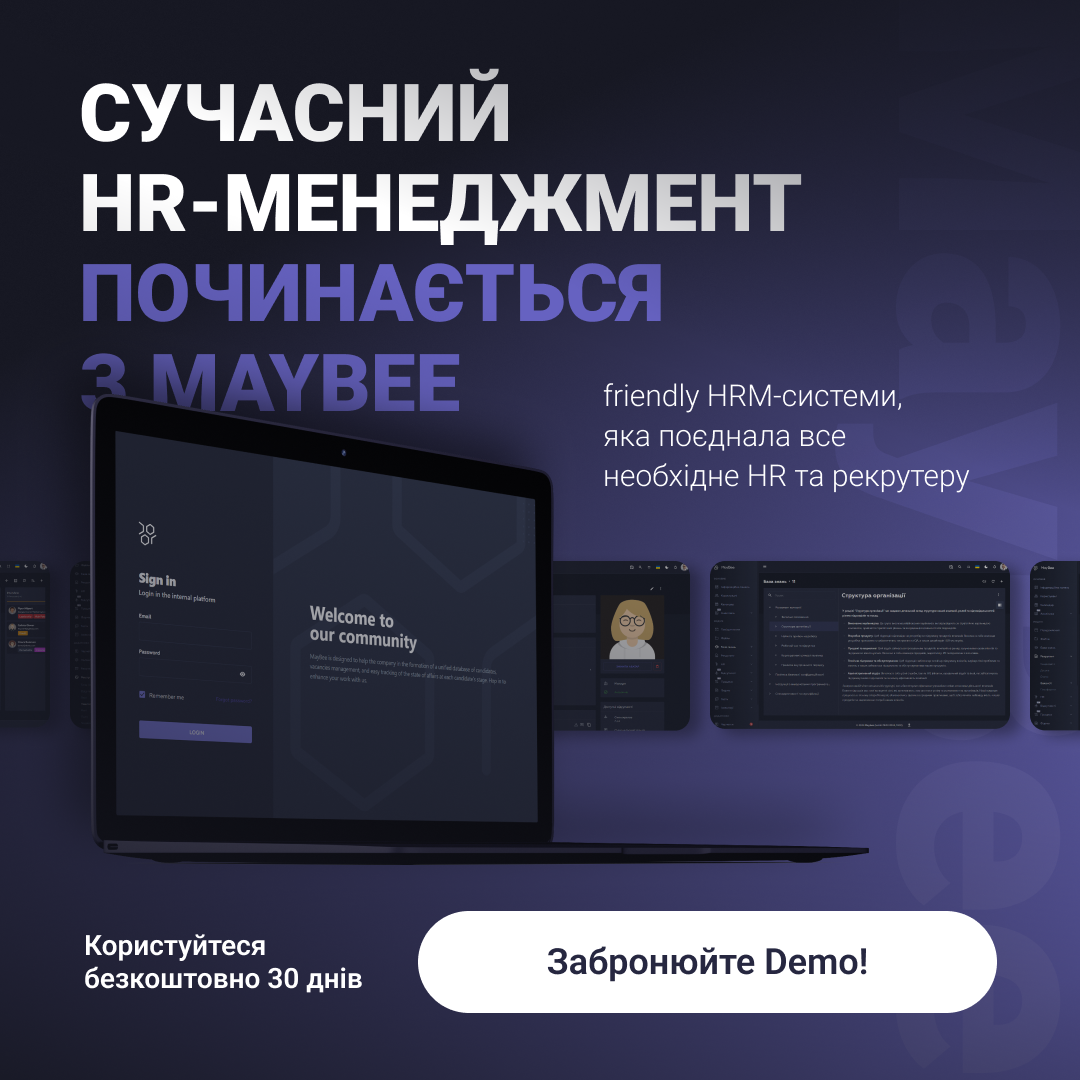
For Meta

For Meta
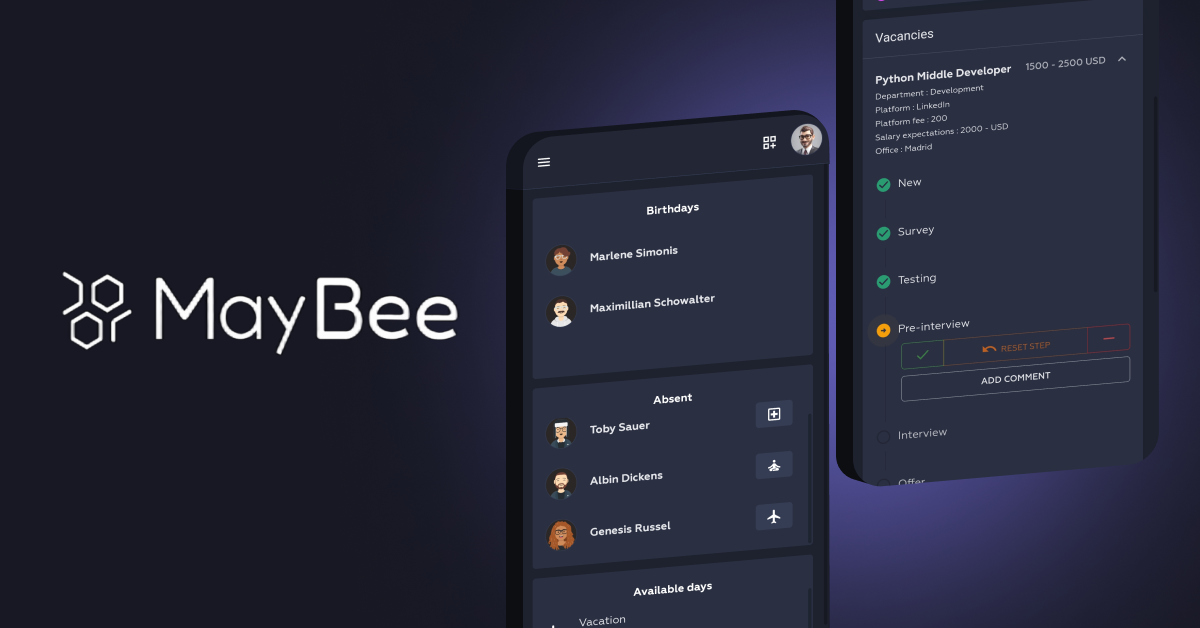
For Google
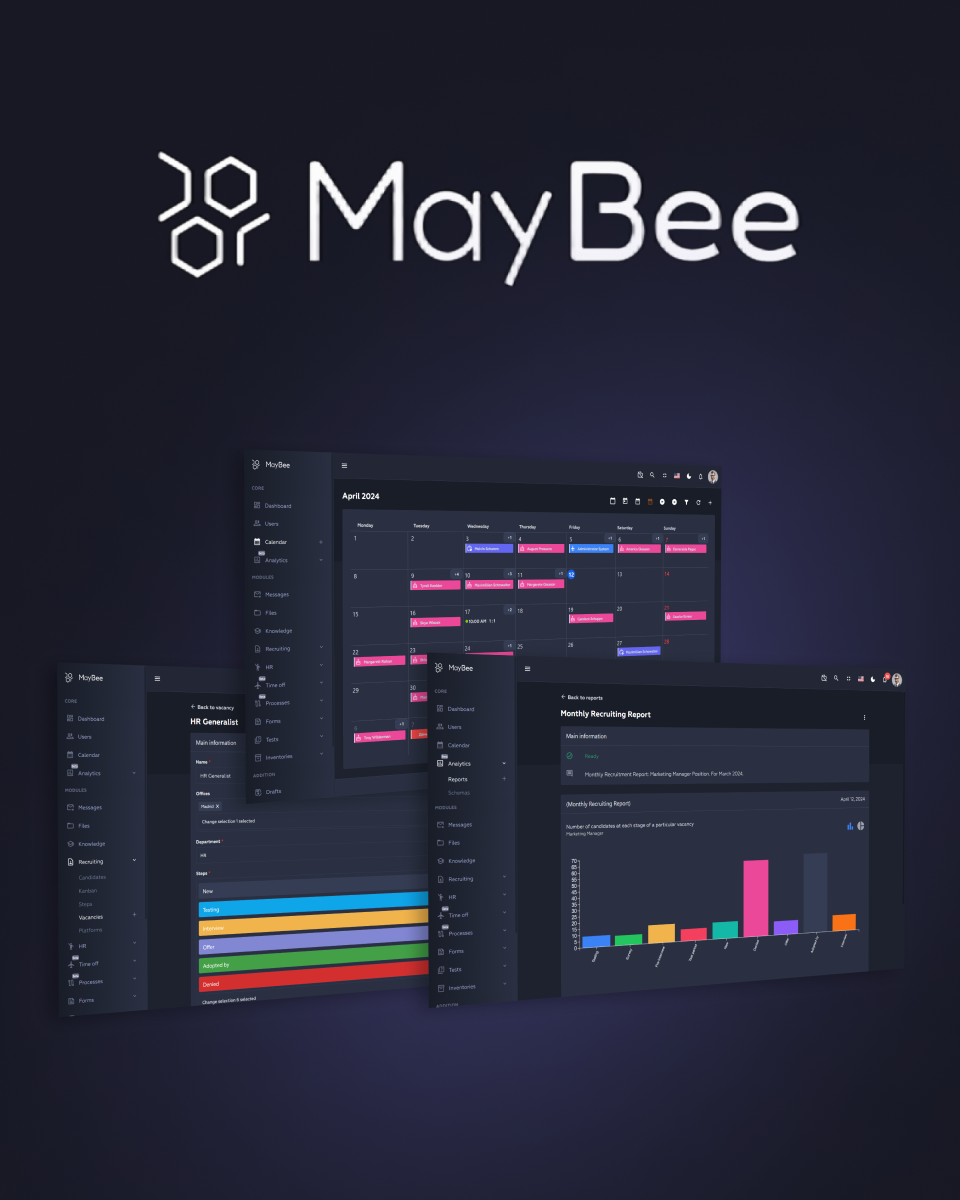
For Google
Goal: to ensure that from the very first interaction, the client understands MayBee as humane, simple, and convenient.
We constantly analyzed where the funnels were “leaking,” which messages triggered better reactions, and where approaches needed to change.
- Testing texts, visuals, and offers.
- Optimizing campaigns in Meta and Google Ads.
- Weekly budget optimization to maximize returns on every invested dollar.
- Setting up ad accounts and event tracking.
And importantly, we took a comprehensive approach to promotion, so additionally:
- Built a new landing page structure to increase conversion.
- Implemented a process for analyzing results and monthly planning.
- Prepared a database of bloggers for collaboration at further stages.
We adapted advertising messages on the fly whenever we saw the market reacting differently than expected.
Insight: Advertising is only part of communication. Advertising does not equal all marketing. Many factors must coincide for a customer to decide to leave a request. We research these selection factors at the marketing strategy development stage and use them to form a list of strategic tasks that need to be implemented in the business.
Website
In our work on the website and landing pages for advertising, we:
- Developed structures for new pages (About Us, Showcase, Hire ReactJS).
- Created SEO content for each page.
- Conducted content localization for the English version.
- Provided design and usability recommendations to increase conversions.
Marketing that doesn’t need to be controlled is a myth. The only question is how much time you spend on it.
Building trust through the voices of real people
Among the redundancy of offers and products, especially for a service that is just starting to enter new markets, it is important to go beyond just being visible. It’s important to build trust, or better yet, to have someone you know say:
“I tried it — it really works, take a look.”
So we decided: we need a separate line of communication — through bloggers:
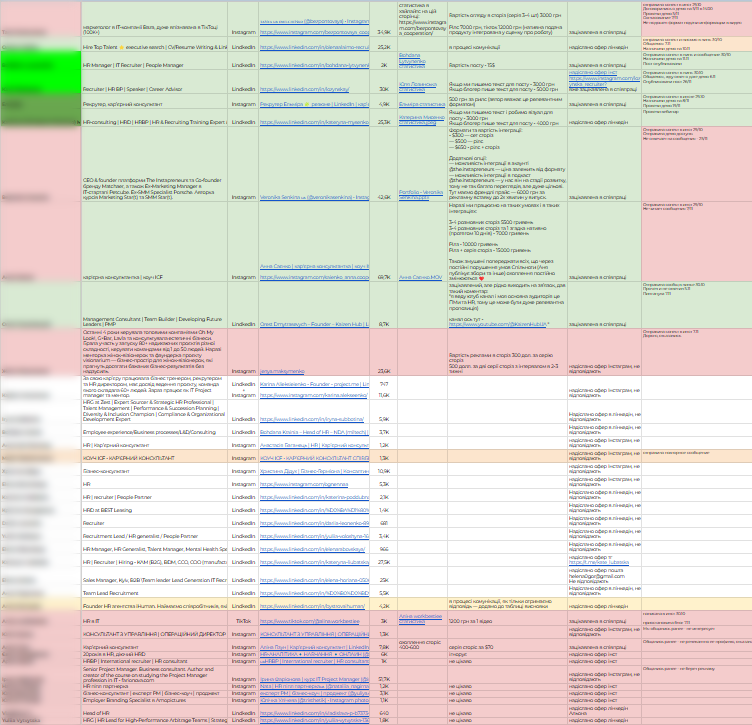
🟡 We have compiled a list of bloggers who truly resonate with the target audience: HR specialists, recruiters, small business owners. No “millionaires.” No excessive entertainment content. Only those who speak the language of professionals.
🟡 Next — verification: activity, style, audience quality, reactions in comments.
We knew: 500 genuine views are better than 50,000 empty ones.
Presentation
One of the features of working in the marketing department for B2B is paying attention to the requests from other company departments. Such requests may include creating presentations and commercial proposal templates for the sales department.
The development of presentation materials always begins with a clear understanding of the goal and answers to the questions of who and how will use this presentation.
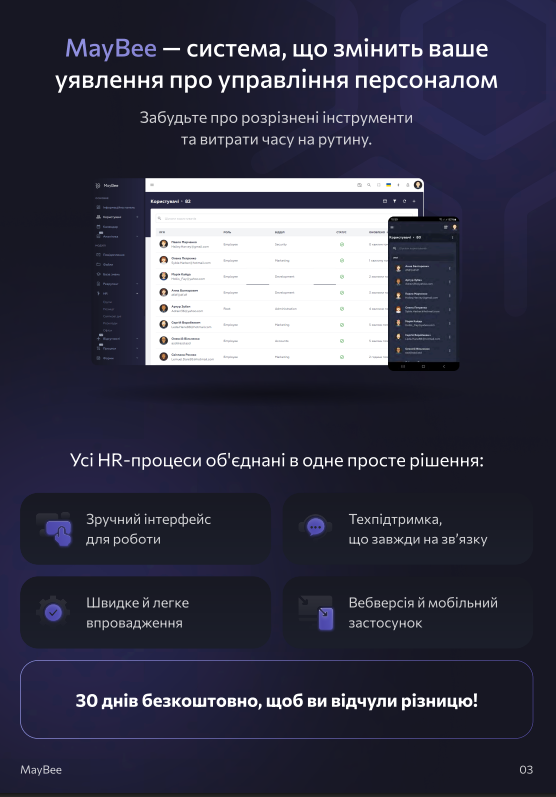
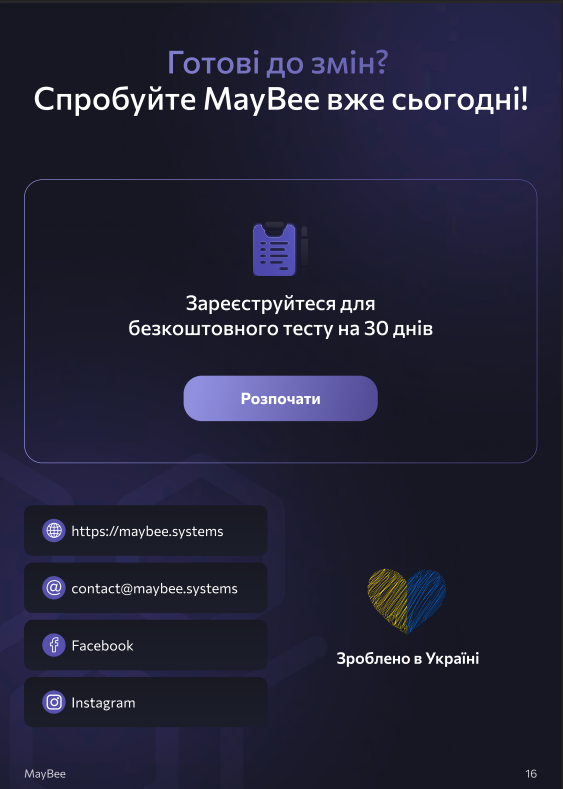
Yes, guided by the client’s request, we created a presentation that leads the client from interest to decision:
- Developed the structure and texts of the presentation: arranged the information logically — problem → solution → examples → proof → actions.
- We designed everything: created a minimalist, modern style with an emphasis on “clear”.
Examples of slides:
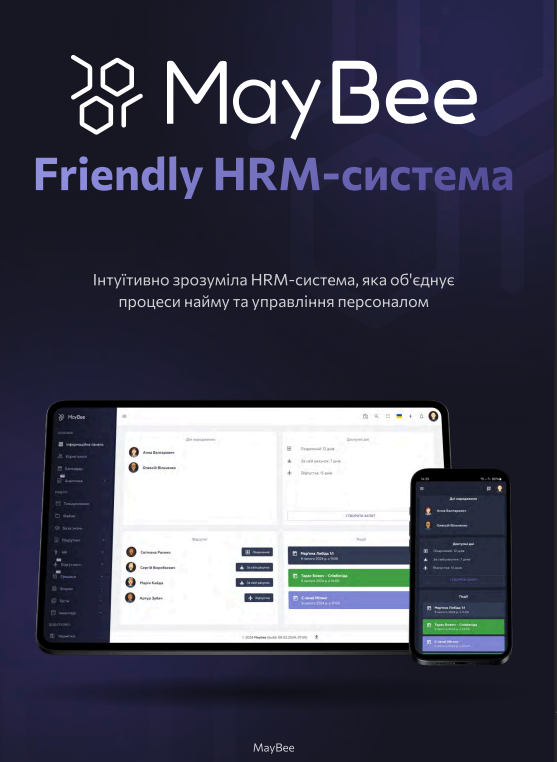
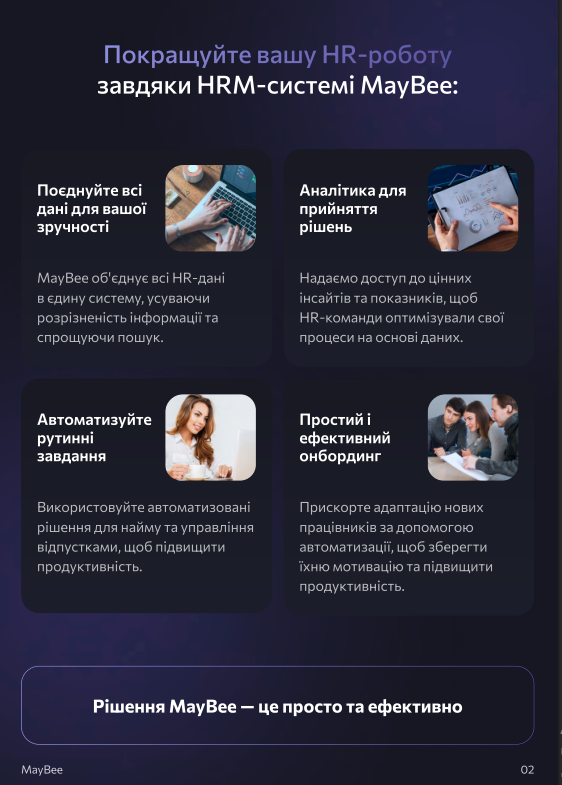
- builds trust through clear structure and concreteness;
- allows use in various situations: from sales to partnership negotiations.
What is the result?
We know how to turn the ambitions and potential of a B2B product into real sales and systematic growth. We have set priorities for this business and launched a full-fledged marketing function.
Advantages of a remote marketing department format:
- Less time spent on managing and coordinating contractors: no need to constantly check, remind, or inquire about the progress.
- No urgent replacements or training of new specialists, which often happens in in-house teams.
- Content, advertising, copywriting, and design work as a unified whole with a clear common goal.
Do you have a product and ambitions, but no systematic marketing yet?
We know how to turn the ambitions and potential of a B2B product into real sales and systemic growth.