









Oh, a new application!
And while our managers are fighting for the opportunity to contact you, let’s get to know each other better.
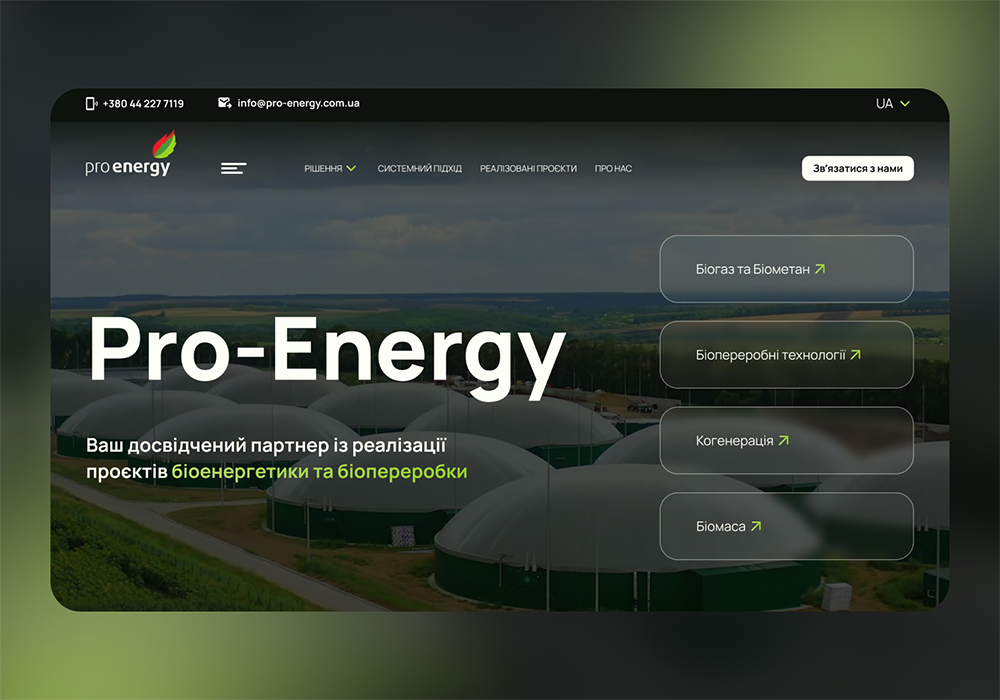
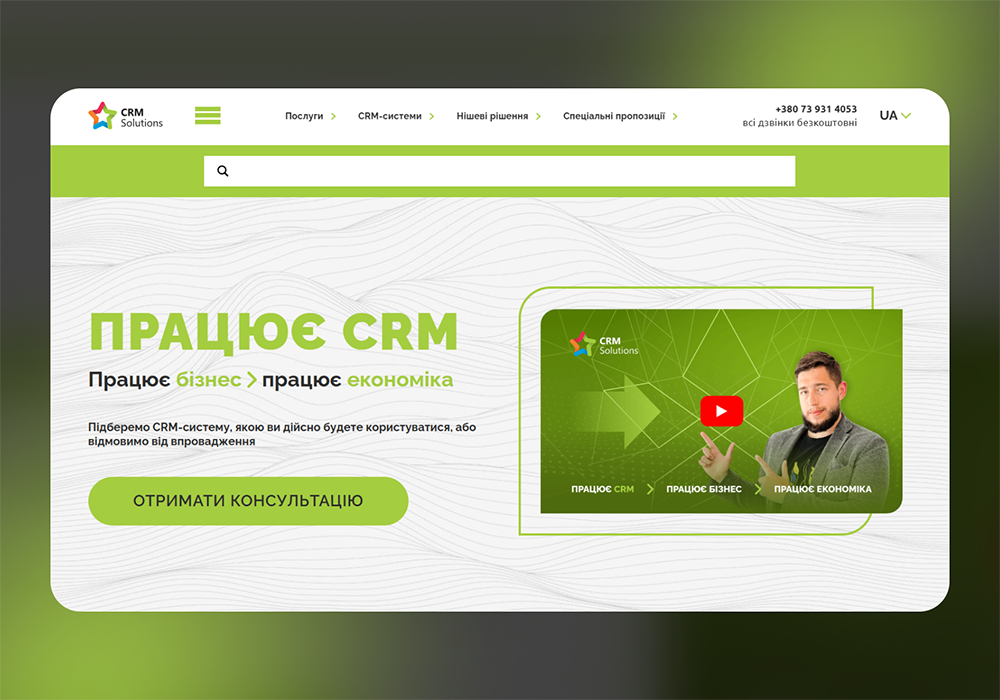
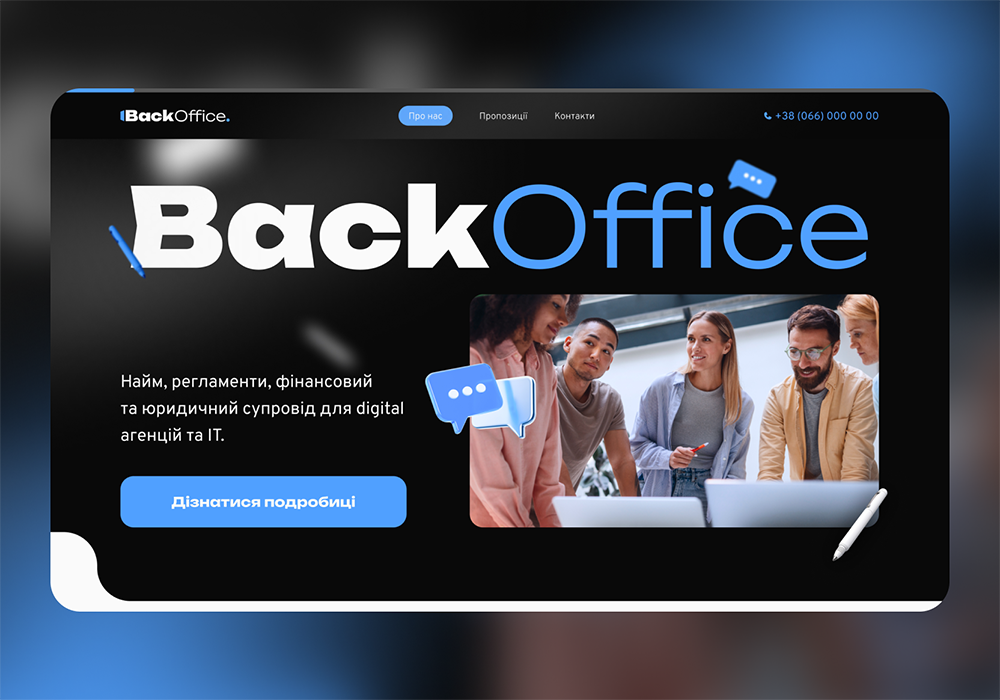
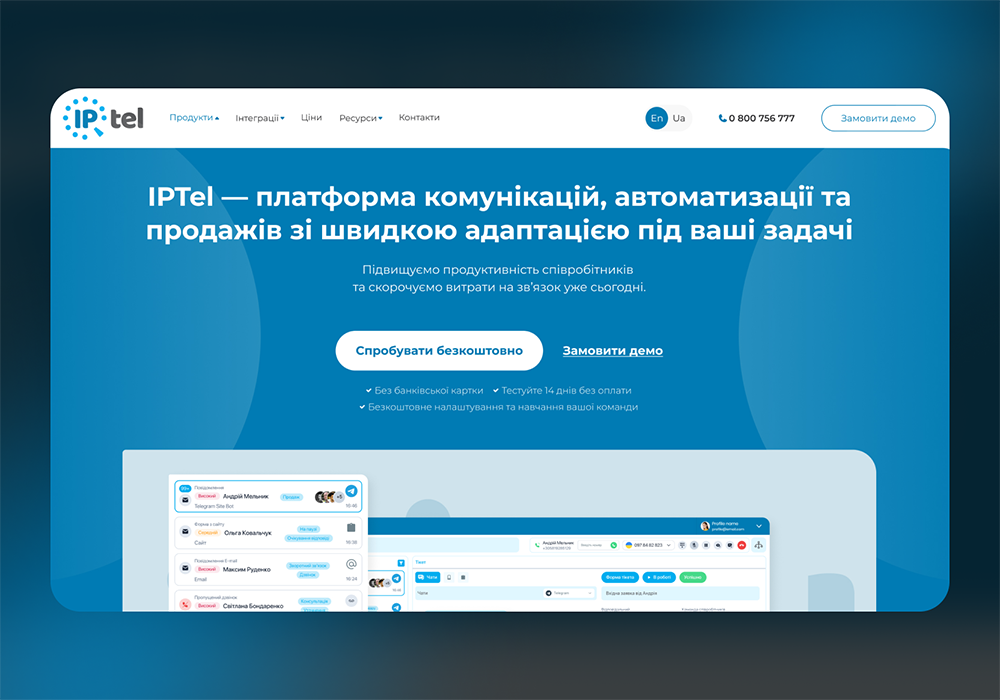
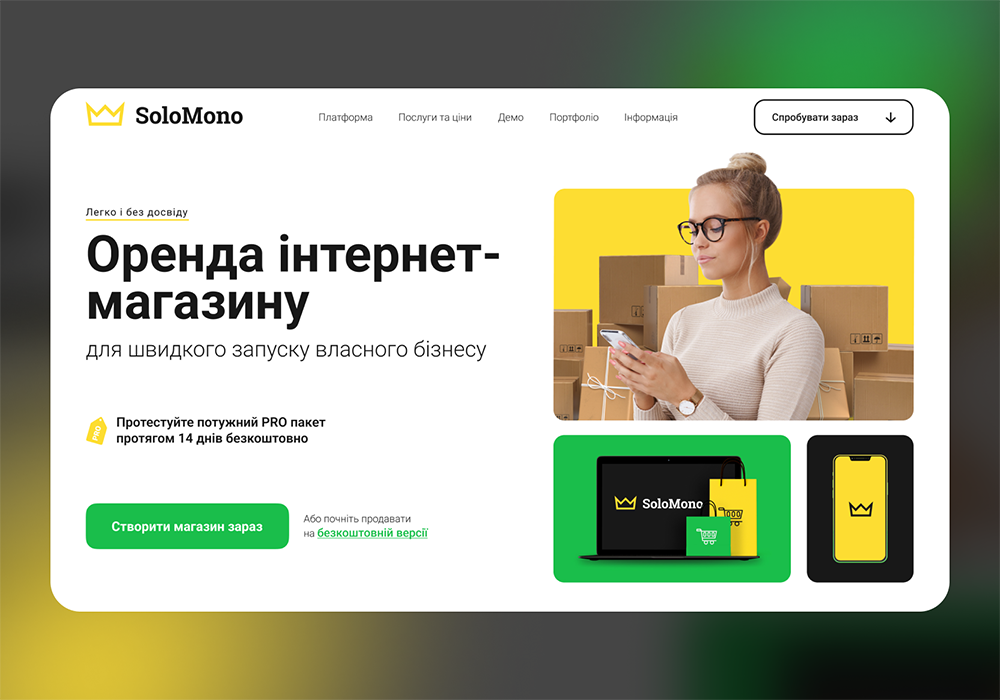
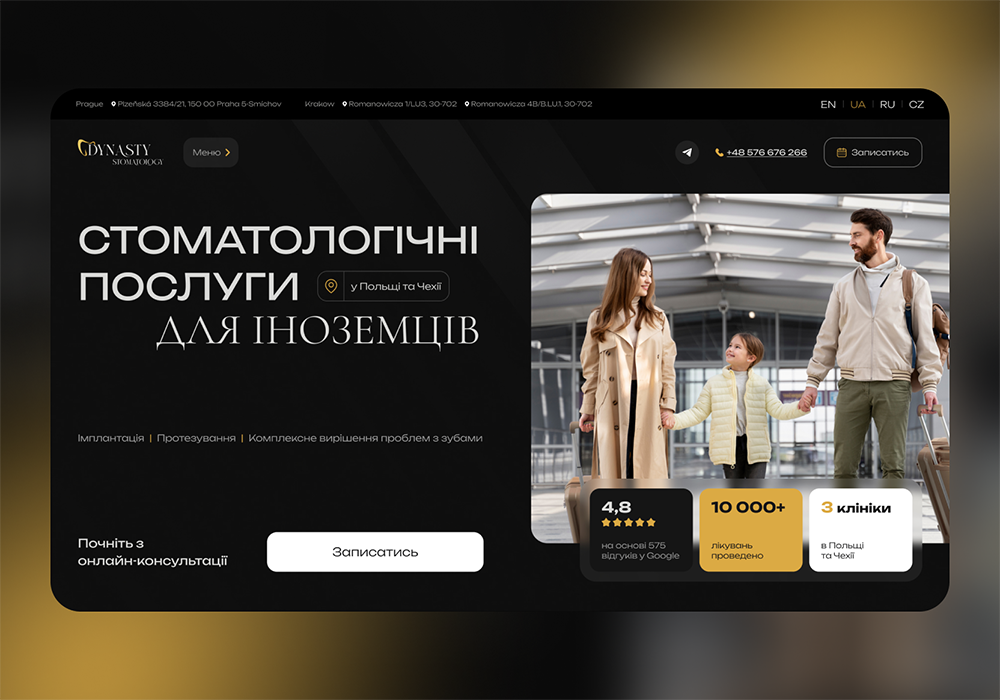
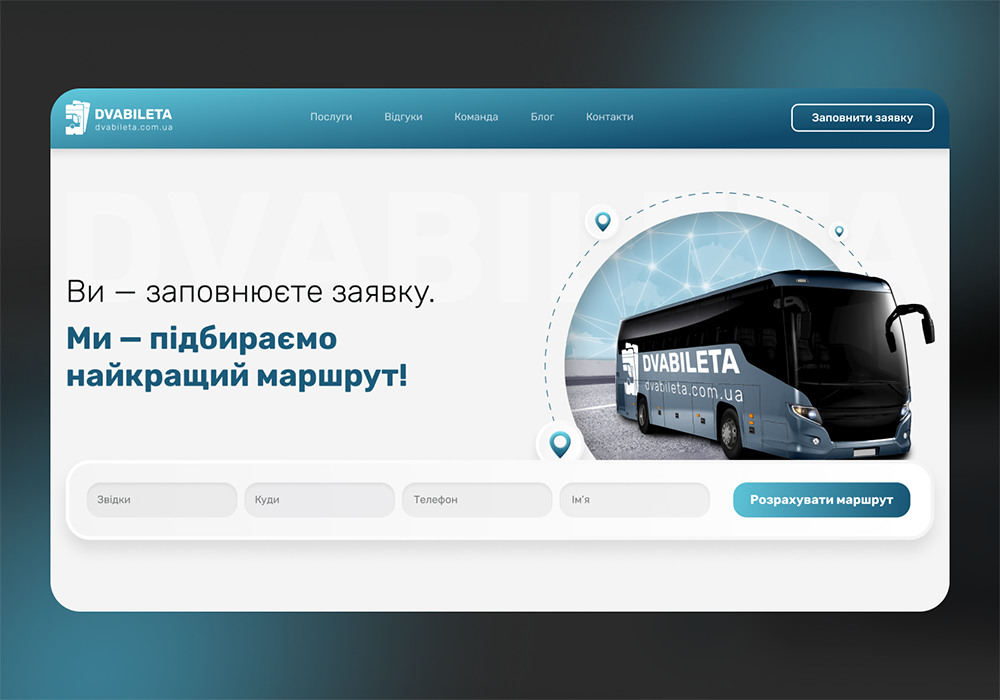
As a marketing department, we constantly commissioned the creation or refinement of websites for clients. But finding high-quality contractors at reasonable prices was not easy. That's how our internal development department came about.




The cost is calculated based on your preferences, business area, and other factors. Submit your request, and we will offer the best solution for your specific case.
During the free consultation, we will:

Discuss your business plans and needs.

Answer your questions about the stages of work and results.

Determine the cost of such work.


Between 6 and 15 specialists are working on the project

Sofiia Nebosklonova
Project Manager

Anna Simachenko
Content manager

Kateryna Hryvnak
UI/UX Designer

SEO Specialist, Motion Designer, Tester
+ other experts needed for your project

Ukrainian framework «choice factors»: why customers choose you.

Planned profit — in just three months. How «remote departments» help businesses grow rapidly. Case studies

Outsourced sales and marketing: save time searching for a team, save money, and see results in 3 months.
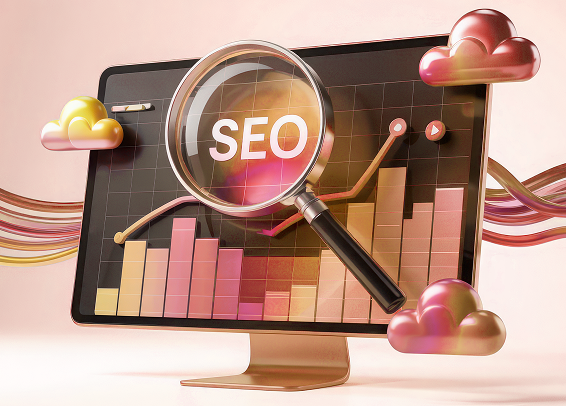
Without SEO optimisation, your project will get lost among hundreds or thousands of other projects in the same niche. The higher the website’s ranking, the more users will visit it. Some of the traffic will be taken by contextual advertising, but most users choose websites from the top positions of organic search results.
Many people only think about SEO after launching their website and end up wasting time, money and potential customers. By starting optimisation at the development stage, you lay a solid foundation for your website’s visibility in search engines from day one.

Information websites enable visitors to quickly obtain all the information about a company’s products in a convenient format. This type of website can be an effective business tool for a company and attract new potential customers.
However, in addition to providing information in a convenient form, you need to take care of the usability and reliability of the resource so as not to lose new applications. To do this, we recommend contacting experienced specialists to avoid the need for additional adjustments in the future.

Do you have a physical store, but don’t understand why sales aren’t increasing? This means you need to develop an online store.
What will this achieve? 🤔

This is a website that will become your company’s business card on the Internet. Such a site allows you to convey all the information about yourself to the user and make a positive impression. In addition, you will gain new customers at minimal cost.
Another reason to choose a website over other options, such as advertising banners or flyers, is its durability and the ability to make changes in line with reality.

A corporate website is a website created to present a company, its services and information to customers. This type of website serves as the company’s business card on the Internet and can reflect its style, values and identity.

A personal brand website is a website designed to present and promote a personal brand. Such websites can be used by teachers, authors, artists, and specialists in various fields.
The main features of a personal brand website include:

Every business has its own needs. Therefore, it is not necessary for everyone to create websites. Perhaps a landing page would be the ideal option for you.
A landing page is a single-page website designed for a specific marketing task or offer and intended to attract attention and convert leads into customers. A landing page has a specific structure and functionality to effectively achieve its goal.
The price of a website for a business depends on the type and complexity of the project, as well as on the fact that all stages are supervised by a marketer. On average, website development can cost from $1,500 for a simple landing page, from $6,000 for a full-fledged promotional website, and from $12,000 for a corporate website. The cost of creating a website consists of the hours of a strategist/marketer (structure, offer, funnel), copywriter, designer, developer, testing, and integrations (CRM, analytics, payments, etc.). Therefore, when answering the question “how much does it cost to develop a website for a business,” it is important to look at the range and composition of the work.
A marketing website is a business website designed under the guidance of a marketer with sales goals in mind: a clear offer, logical structure, blocks with benefits, case studies, reviews, integration with CRM, and analytics. Such a website, which sells, is created based on audience research, understanding of the product and sales funnel, so it works as a systematic marketing tool, not just as a result of design and development work.
The time it takes to develop a website depends on the type of project, the number of pages, the complexity of the design and functionality, and the speed of approval from the business side. On average, under the guidance of a marketer, a simple landing page takes 3-5 weeks to complete, a corporate website for a business takes 10-14 weeks, and complex solutions with integrations (personal accounts, payments, non-standard functionality) can take 6+ months. When answering the question “how long does it take to build a website,” it is important to consider the entire cycle: analytics, structure, texts, design, programming, testing, and analytics configuration.
The process by which Solve Marketing creates a sales website under the guidance of a marketer consists of several clear stages.
First, an analysis of the niche, competitors, audience, and sales logic is formed. Then, the marketer develops the structure, offer, and content logic — the foundation without which design and development will not yield results. The next stage is design, where visual language reinforces marketing messages. After that, the website goes through a stage of technical development with integrations. The process is completed with testing, optimisation, and launch. This approach ensures a controlled sequence of website creation stages and allows you to get a result that works as part of systematic marketing.
During the website development process, the marketer takes on the strategic part: researching the niche and competitors, forming an offer, writing the page structure, preparing content, and thinking through the funnel logic. It is marketing design that determines how the website will sell: what triggers to use, how to place blocks to increase trust, and how to guide the user from the first screen to the application. Thanks to this, design and technical implementation do not exist separately, but work as a single system, and the result is not just a website, but a sales tool.
Yes, the creation of a website under the guidance of a marketer includes complete copywriting for the website: forming an offer, writing texts for all blocks, descriptions of services, advantages, case studies, FAQs, and calls to action. Content is created based on analytics, positioning, and structure to enhance sales and the logic of the user journey. Therefore, content for the website is not a separate option, but part of a holistic process where texts work together with design and the marketing funnel.
SEO during development determines the logic of pages, the hierarchy of headings, and how users and search engines will perceive the content. If SEO is taken into account right away, the site structure is formed correctly: pages have well-thought-out semantics, the necessary key queries, relevant blocks, and logical internal transitions. Such an SEO-optimised website is indexed faster, promoted more easily, and generates organic traffic without additional costs. When SEO is integrated into the process at the design stage, there is no need to rework pages after launch, which saves money and makes the result sustainable in the long term.
There are several main types of websites: single-page landing pages, promotional websites, corporate websites, online stores, and websites with custom functionality. The choice of type depends on the business objectives: for quick hypothesis testing, a landing page is optimal; for a company with a complex service structure, a corporate website is optimal; for e-commerce, an online store is optimal; and for products with strong positioning, a promotional website is optimal. Under the guidance of a marketer, we determine which website is right for your business, taking into account sales goals, funnel logic, and long-term strategy.
Yes, we work not only with new projects, but also with those that need a website redesign or a major update. If the structure, content or UX are outdated, the marketer conducts an audit, identifies weaknesses, and develops a new logic so that the website meets modern requirements and works to sell. In cases where the base is optimal, it is possible to refine the website: optimise the structure, update texts, improve visual presentation, speed, and integrations. This approach allows you not to create everything from scratch, but to get a result that significantly enhances conversion and trust.
After launch, you can choose one of the website support packages: stability monitoring, prompt error correction, form support, integrations, and analytics. The marketing and technical teams offer website support and development: content updates, new page additions, structure improvements, SEO work, and conversion enhancement. This kind of website support makes it not just a static project, but a living tool that grows with your business and constantly adapts to new tasks.
A landing page is a one-page format focused on a single service or user action. It is suitable for quick launches, hypothesis testing, and simple product lines. A full-fledged website covers more pages, allows you to reveal the structure of the business, display different areas, case studies, the team, SEO pages, and complex funnels. The choice between a landing page and a website depends on the scale of the tasks: if it is important for the business to present itself comprehensively and build long-term traffic, it is better to choose a multi-page format. Under the guidance of a marketer, they determine which website to choose, taking into account the sales strategy, goals, and level of competition in the niche.
The site structure, navigation, and UX are formed by a marketer at the design stage: business goals, user behaviour, competitive environment, and future funnels are analysed. Based on this, a logical website structure, clear navigation, and a sequence of blocks are created, which leads the user to the target action without chaos and unnecessary steps. We provide comprehensive assistance in determining the optimal content for pages: from key sections and semantic blocks to texts, trust triggers, and CTAs. This approach ensures a well-thought-out UX structure in which each element works to promote sales and user comfort.
We work with several modern CMSs, selecting the platform based on the business objectives, not the other way around. If you need a scalable system with a flexible structure, complex integrations, and SEO potential, a WordPress website would be the best choice. For projects where animations, a modern front-end, and high design detail are critical, Webflow and other platforms work best. During the design phase, the marketer selects a CMS based on the goals, scale, and long-term strategy so that the platform works for the business rather than limiting it.
Yes, during the development process, we fully configure the technical part: we integrate CRM, connect Google Analytics, Facebook Pixel, event tracking, form analytics, and other tools necessary for marketing. This is done at the launch stage so that the website can be immediately used for advertising, lead generation, and analytics. Such CRM integration of the website and correctly configured analytics allow you to see real data, control the funnel, and optimise sales without technical losses and «lost» applications.
Przejdziemy na język angielski
Znajdujesz się teraz na stronie, która nie jest jeszcze dostępna w języku polskim. Sugerujemy więc przeczytanie wybranej treści w języku angielskim.
